
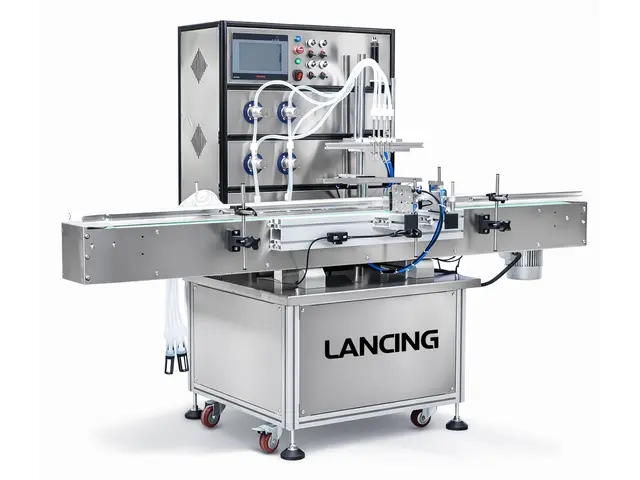
Liquid filling machines
Liquid Filling Machinery
Liquid filling machines configured for free-flowing, foamy, corrosive, hygienic or high-value liquids in bottles, vials, jerrycans and…
View detailsProduct catalogue
Browse automatic, semi-automatic, compact, ATEX, paste, chemical and counter-pressure filling machinery.
Liquid filling machines
Liquid filling machines configured for free-flowing, foamy, corrosive, hygienic or high-value liquids in bottles, vials, jerrycans and…
View details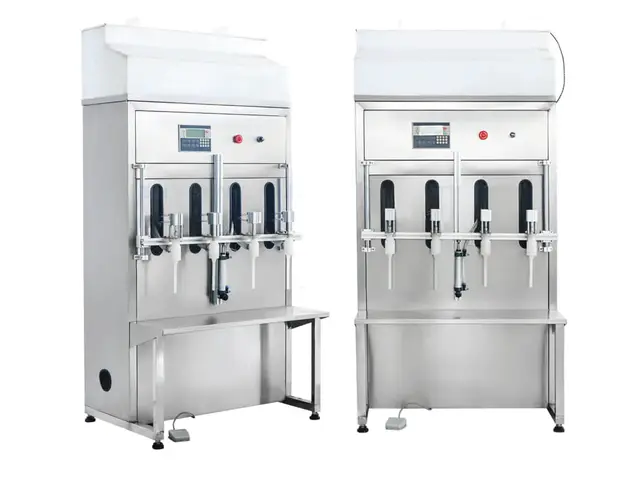
Automatic filling machines
Automatic gravity filler engineered for corrosive liquids like bleach, acids and fertilizers. Non‑metal wetted parts (PP/PTFE/PVC)…
View details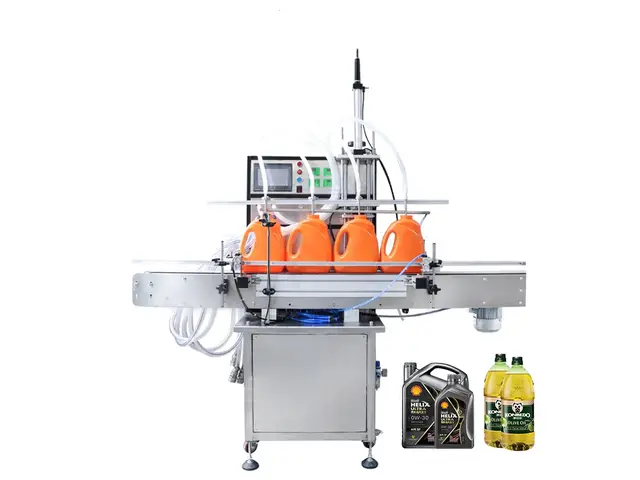
Automatic filling machines
Automatic 4‑head diaphragm‑pump filler for gels, shampoo and detergents. Large 40 L/min flow rate supports ≈30–45 bpm with four…
View details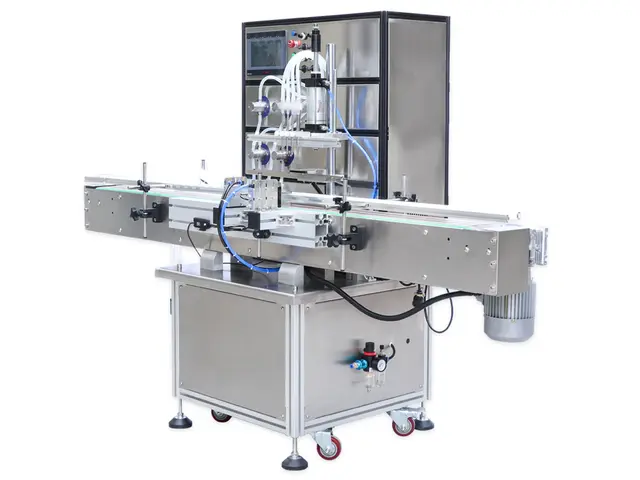
Automatic filling machines
Equipped with a gear pump, this liquid filling machine can work automatically. The machine can fill about 30 bottles/min (at 5L). Each…
View details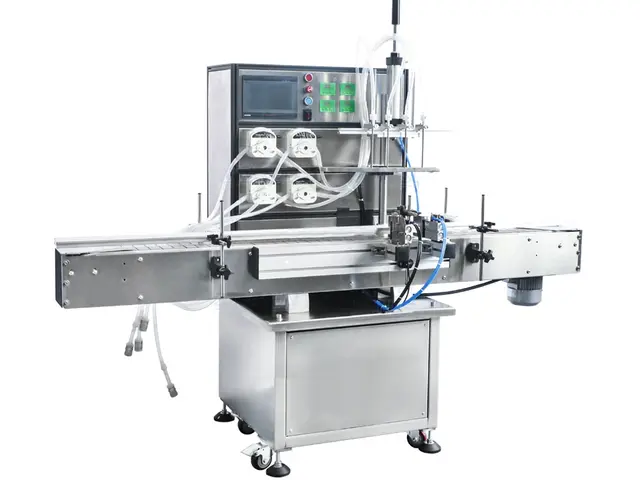
Automatic filling machines
Servo‑controlled peristaltic filler with touch HMI. Dosing volume is set directly on the screen—no need to time the fill. Four…
View details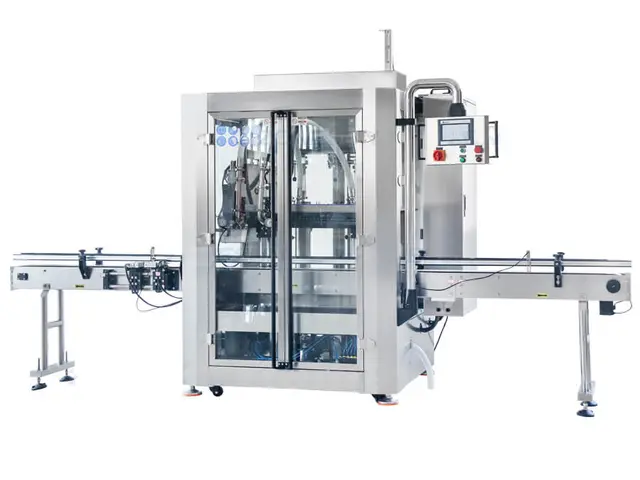
Automatic filling machines
High‑speed servo piston filler with following nozzles that track bottles on the move. Set volume directly on the touchscreen;…
View details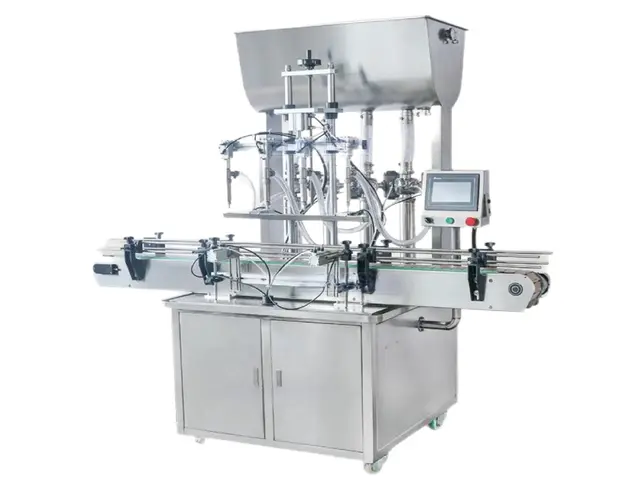
Automatic filling machines
Four‑nozzle automatic piston filler for honey, sauce, cream and lotion. Choose the appropriate cylinder module for your fill size.
View details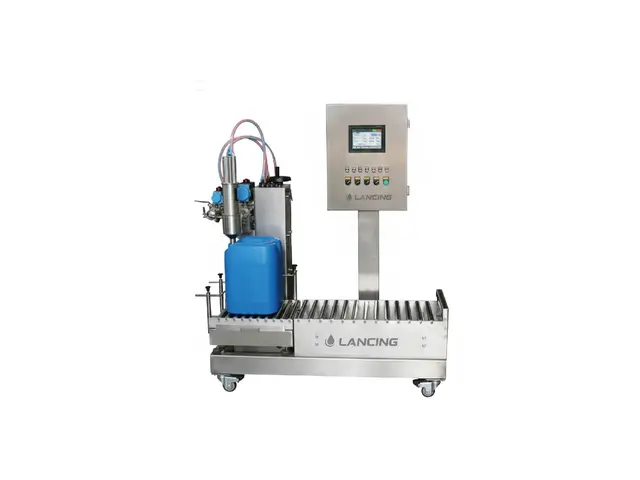
Semi-automatic filling machines
Weighing-based large-volume filler for 5–30 L containers. Diving nozzles handle foamy liquids cleanly while the gear pump keeps supply…
View details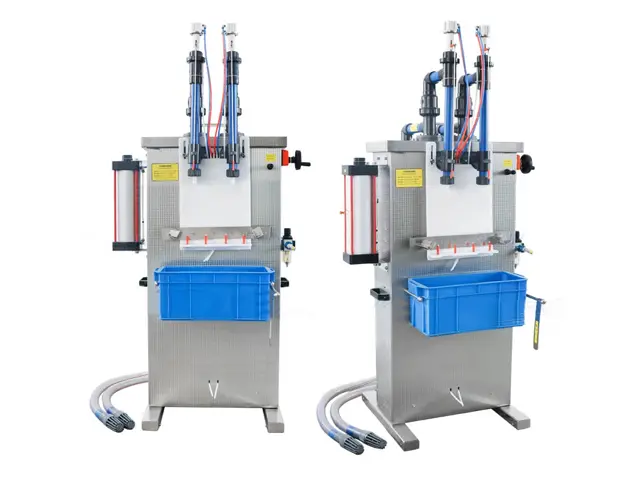
Semi-automatic filling machines
Fully pneumatic, double‑head filler engineered for corrosive liquids like toilet cleaner and acids. All wetted parts are plastic to…
View details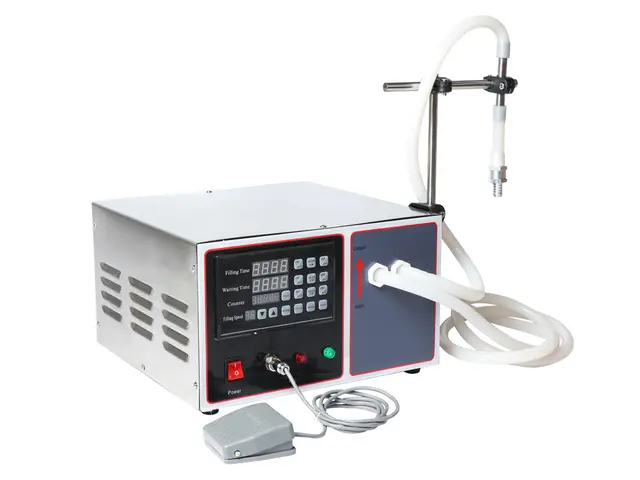
Semi-automatic filling machines
Bench‑friendly diaphragm‑pump filler with built‑in weighing to improve accuracy. Ideal for cosmetics, shampoos and foamy or solvent‑based…
View details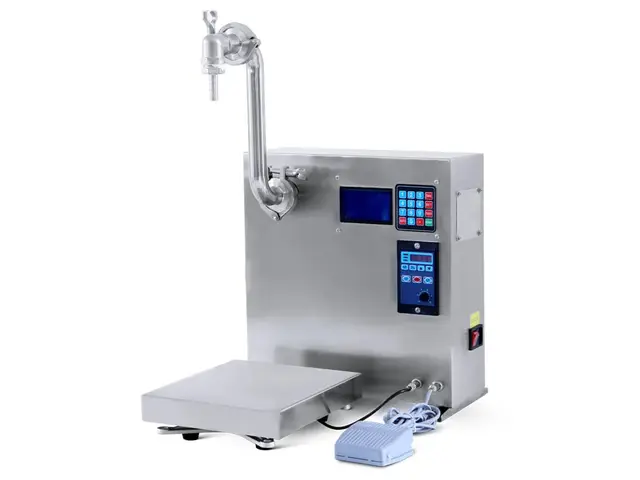
Semi-automatic filling machines
Bench‑friendly gear‑pump filler with built‑in weighing. High flow (up to 36 L/min) handles oils and thicker liquids. Set a target weight…
View details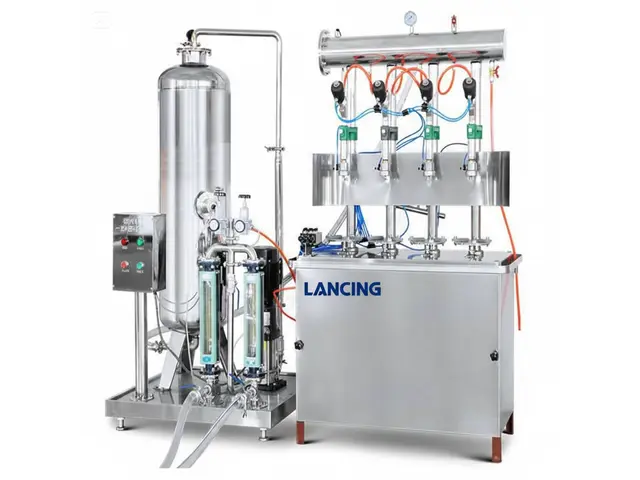
Semi-automatic filling machines
Compact 4‑head counter‑pressure can filler with mixing module. Designed for soda, sparkling drinks and RTD cocktails in 330–500 ml cans.
View details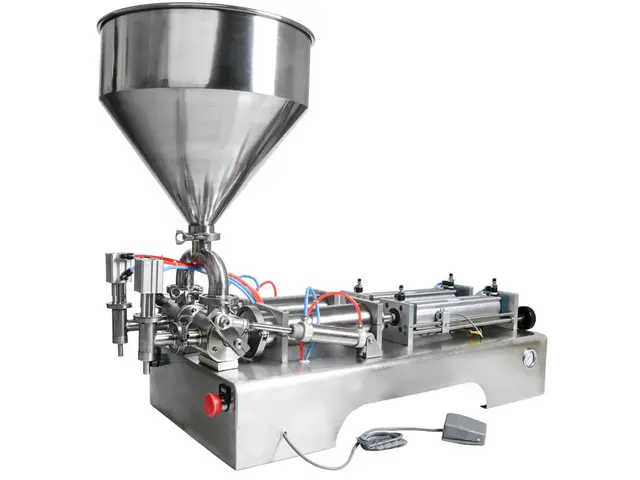
Semi-automatic filling machines
Pneumatic twin‑head piston filler with hopper. Select a cylinder module from 10–100 ml up to 1000–5000 ml to suit your dose.
View details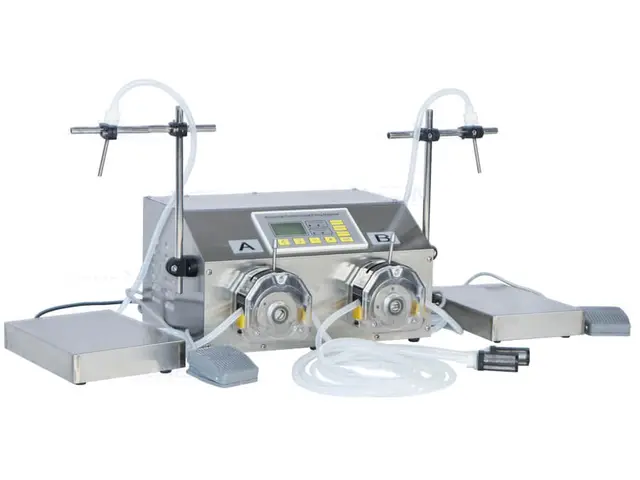
Semi-automatic filling machines
Double‑head semi‑automatic peristaltic filler for large bottles and jugs. High flow (≈12 L/min × 2) with tubing‑only contact makes quick,…
View details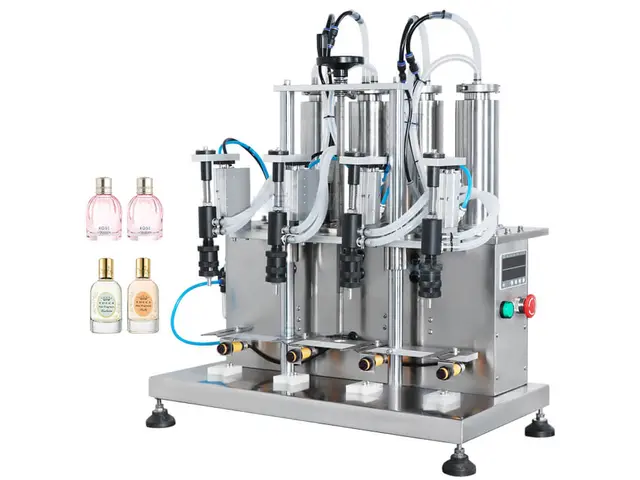
Semi-automatic filling machines
Overflow Vacuum Fillers are designed to fill to a level rather than to dispence a specific volume of liquid. Ideal for applications with…
View details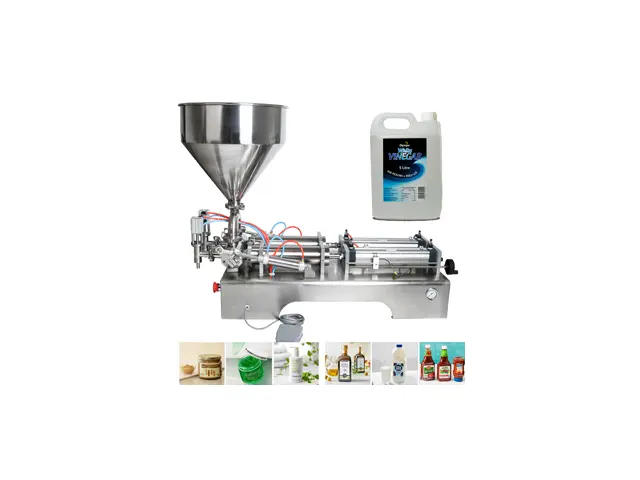
Semi-automatic filling machines
The semi-automatic system offers separate machines each requiring manual product placement but still affording a very significant…
View details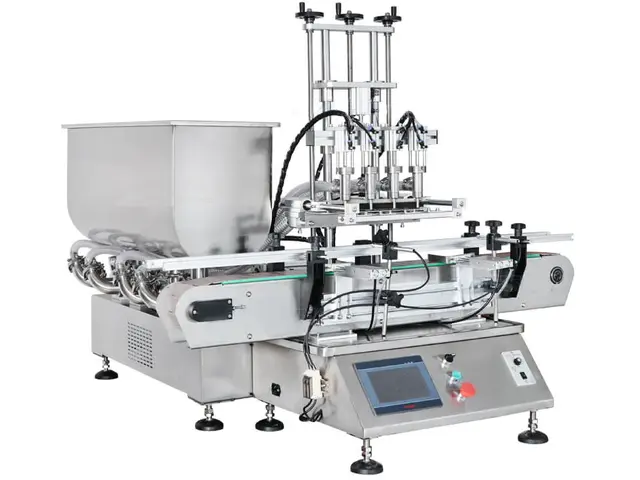
Compact filling machines
Tabletop 2–4 head piston filler for soaps, shampoos and viscous liquids. Accurate volumetric dosing with ≤±1% typical accuracy.
View details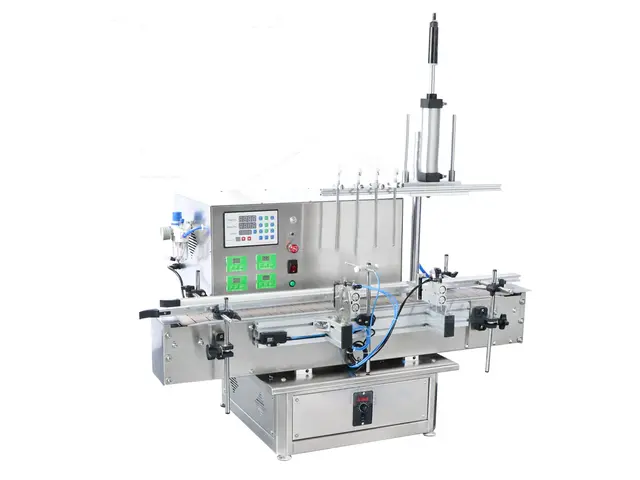
Compact filling machines
Desktop automatic peristaltic filler with 4 nozzles. Each head has an independent pump (≈60 W) delivering up to ≈4000 ml/min; ≈30–50 bpm…
View details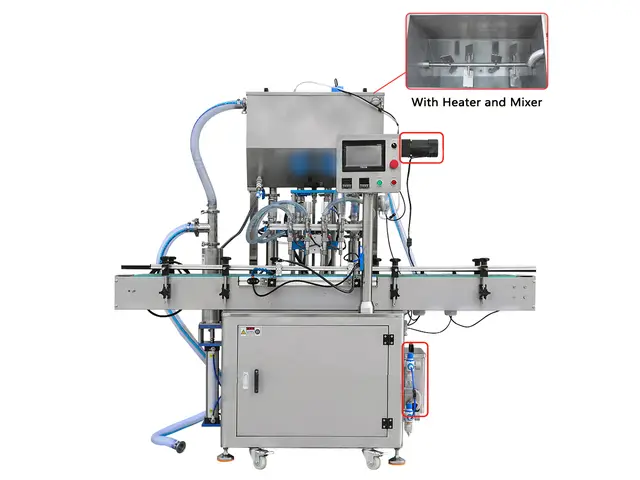
Paste and viscous filling machines
Six‑nozzle automatic piston filler for viscous products like cream, pesto or béchamel. Select a cylinder module (5–100 to 1000–5000 ml)…
View details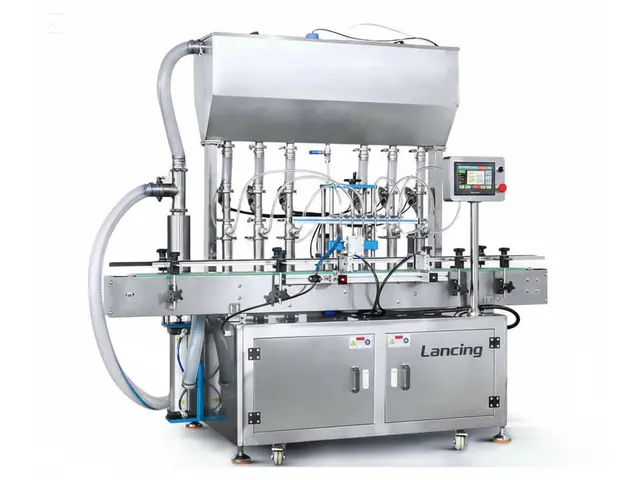
Paste and viscous filling machines
Paste and viscous liquid filling machinery for creams, gels, sauces, honey, cosmetics, adhesives and thick household products.
View details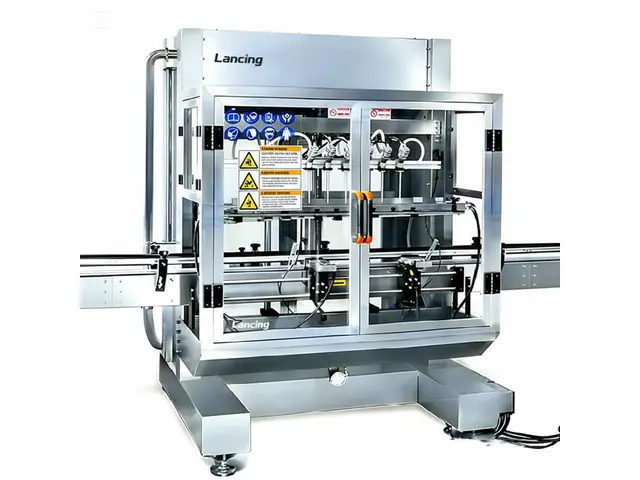
ATEX filling machines
Automatic filling platform engineered for flammable solvents in zoned environments. Explosion‑protected electricals and pneumatic…
View details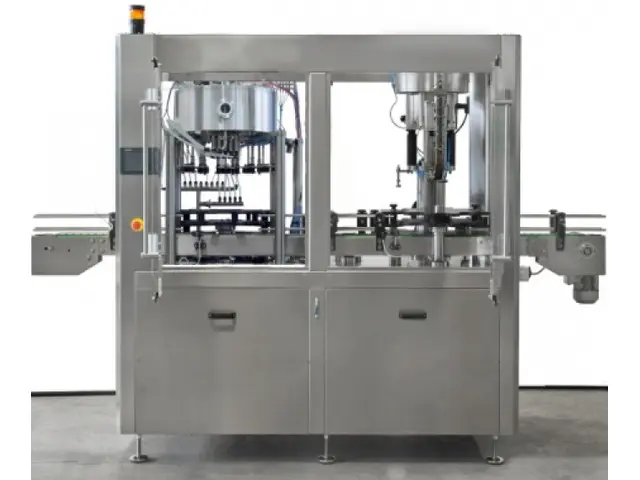
Carbonated drink filling machines
Manufactured for Lancing, GD series constant pressure filler is an advanced level bottle-filling machine which is designed and developed…
View details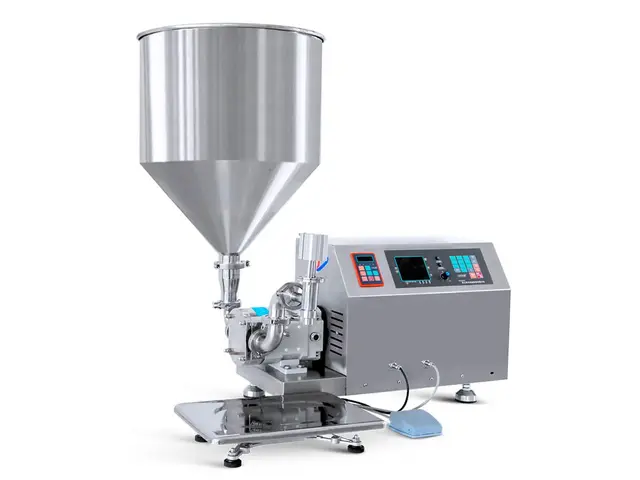
Specialist filling machines
The Roto Lube pump filling machine has advantage of high accuracy when filling thick liquid or paste like jam,noodle pulp,meat…
View detailsSpeak to Lancing
Tell us the product, fill volume, container and output target. We will recommend a suitable semi-automatic, compact or fully automatic configuration.
Compare the machinery by process
The product catalogue covers several metering principles because no single liquid filler is best for every application. A machine that performs well with a clean, free-flowing oil may not be the right choice for an aerated detergent, a viscous cream, a product containing particles or a solvent handled in a classified area. The first comparison should therefore be based on how the product moves, how it must be cleaned and how the container is presented.
The categories below are a practical route into the range. Final selection should include the actual liquid, containers, closures and required line output. Where one project includes filling, capping and labelling, the transfer and control strategy should be assessed as one system rather than as independent machines.
Peristaltic, piston, gear-pump, diaphragm, gravity, flow-meter and weight systems measure or control product in different ways. Compare them against viscosity, dose range, particles, shear sensitivity, hygiene and the required evidence of fill performance.
Semi-automatic machinery can suit varied short runs and manual pack presentation. Compact inline systems provide a smaller automated work cell. Fully automatic multi-head equipment supports continuous container transport and integration with other line operations.
Container opening, shoulder shape, rigidity and stability affect nozzle access and handling. Foaming or stringing products may require diving nozzles, controlled acceleration, shut-off valves or suck-back. Trial the most difficult pack at the intended fill level.
Specification and trial evidence
This matrix is qualitative. Actual suitability and output must be confirmed under representative product and pack conditions.
| Selection point | What to define or test | Why it matters |
|---|---|---|
| Small, clean liquid doses | Peristaltic filling is often considered where product isolation in replaceable tubing and controlled small-volume dosing are useful. | Check tube material, tube life, product temperature, suction lift and any bubbles entering the line. |
| Viscous liquids and pastes | Piston volumetric or rotor-lobe routes may be considered where positive displacement and larger product passages are important. | Check particle size, valve geometry, hopper or feed pressure, temperature and clean-down access. |
| Oils and free-flowing chemicals | Gear-pump, diaphragm, gravity, flow-meter or weight filling may be appropriate depending on pack size and chemical compatibility. | Confirm lubrication properties, seals, flow stability, foaming, density and whether dry running can occur. |
| Foaming products | Controlled flow, bottom-up nozzle movement or level/overflow methods may reduce air entrainment and foam generation. | Trial the intended fill rate and nozzle immersion profile; a slower stable fill can produce more good packs than a fast foaming cycle. |
| Large containers | Weight or high-flow pump filling can suit pails, buckets and jerrycans where handling and final mass are central. | Include tare variation, platform stability, container removal, splash control and safe full-pack handling. |
| Flammable or aggressive liquids | Material compatibility and hazardous-area obligations must be established before a machine is selected. | Supply the SDS, zoning/classification information, site standards and details of all connected equipment. |
Buyer questions
Different liquids create different metering, sealing, cleaning and handling demands. The range allows the dosing method to be matched to product behaviour rather than forcing every application through one pump or valve design.
Start with both. The product determines how it can be moved and measured; the bottle determines nozzle access, sensing, stability and line handling. A viable system must satisfy both sets of constraints.
Compare good output per shift, operator tasks, changeover frequency, cleaning time, container handling and integration needs. Automatic operation is not automatically better for a varied, low-volume production schedule.
A representative trial is valuable where viscosity, foaming, particles, stringing, small dose accuracy or container instability creates uncertainty. The trial should use agreed acceptance criteria and realistic samples.
Send the product and SDS where relevant, fill range, container and closure samples or drawings, required output, utilities, cleaning approach and any capping, labelling or coding requirements.
No. Published ranges and cycle figures need to be interpreted under stated test conditions. Product viscosity, feed conditions, nozzle size, fill volume and container movement can materially change actual performance.
Technical guidance
Use these engineering guides to narrow the product catalogue.
Check tank, IBC, pressure, temperature, air and refill conditions.
Read guideSpecify every hose, seal, pump element, valve and nozzle against product and cleaning chemistry.
Read guideConnect machine repeatability with tare, density, sampling and packer controls.
Read guideUse representative liquid and production containers to compare technologies.
Read guideBuyer questions
Catalogue categories are a starting point; suitability comes from the application evidence.
Start with the variable that must be controlled and the way the liquid behaves, then check fill range, product path, nozzle, container handling and cleaning. Shortlist only configurations that can be explained against the real application. The filling process guide connects each machine function to its decision.
Two fillers can share the same frame and number of nozzles while using different meters, valves, tubing, control profiles and product-feed arrangements. Those hidden elements determine how the liquid is supplied, measured and stopped. Ask for the proposed product path and metering principle rather than selecting from appearance or head count alone.
Provide representative product information and safety data, containers or drawings, fill targets, expected range, production context, cleaning method, utilities and integration requirements. Identify which combinations are mandatory now and which are future options. This allows the quotation to state confirmed scope, assumptions and points that require trials.
A catalogue model is a starting configuration when the product, container, nozzle, format parts, guarding, conveyors, controls or acceptance test must be adapted to the application. The base machine may define a platform, but the final quotation should identify the exact product-contact and handling configuration included for the supplied samples and requirements.
Compare evidence as well as machinery
Videos show the recorded arrangement; the final specification must still be matched to the liquid and pack.
View volumetric, peristaltic, pump and counter-pressure machinery with visible transcripts and trial checks.
Align product range, line scope, tests, changeovers, exclusions and acceptance evidence before comparing price.
Range selection
The same nominal fill quantity can be achieved by different technologies. A sound comparison considers product behaviour, cleanability, control, changeover and complete-line requirements as well as the basic machine format.
The Lancing model comparison should be used to shortlist verified configurations by automation level, metering principle and published fill range. It is not a substitute for an application review: the final choice still depends on viscosity, temperature, foaming, particles, container geometry, product feed, nozzle behaviour, required output and the controls or downstream equipment included in the project.
Liquid filling machine ranges overlap because fill quantity alone does not determine suitability. A peristaltic, piston, gear-pump, diaphragm or gravity-based system may cover a similar nominal volume but behave differently with foaming, shear, particles, temperature, cleanability and product hold-up. The useful question is which complete fluid path and control method suit the real production conditions.
A listed filling machine provides a verified starting configuration, but the production solution may require different nozzles, tubing, product feed, guarding, conveyor interfaces, recipes or downstream line equipment. The quotation should identify what is standard, what is configured for the application, and which product and container conditions were used to confirm the proposed scope.
Depending on the application, the project scope may need a holding or feed vessel, transfer pump, level control, container infeed, indexing, cap handling, capping, labelling, coding, inspection, reject handling and accumulation. Utilities, access, guarding, cleaning and change-parts storage should also be defined so the quoted filler can operate as part of a practical production process.
A liquid filler can only maintain its planned output when the upstream supply replenishes product at the required rate. Begin with the fill size and the intended running speed. For example, 20 packs per minute at 250 ml per pack requires an average of 5 litres per minute while running. This is an illustrative planning calculation, not a performance claim for a listed machine.
Then examine the supply cycle. A 12,000-pack order at 250 ml needs 3,000 litres in finished packs, before allowing for the product retained in the system or other measured losses. Identify how many vessel changes or refills that involves, who performs them and whether production must stop. Ask the supplier to review both average demand and the momentary demand during each dose; the two are not necessarily the same.
During the trial, record acceptable filling performance with the normal supply arrangement, including the agreed low-level and replenishment conditions. Watch for changes in flow, entrained air and nozzle delivery using the approved operating procedure. Confirm what happens when product is unavailable and how the next acceptable pack is checked after restart. This turns a headline machine rate into a practical discussion about the tank, transfer arrangement and operating routine needed to support it.
Multiply packs per minute by the volume per pack and use consistent units. For example, 20 × 0.25 litres is 5 litres per minute while filling; the supplier must also check instantaneous demand.
Include the normal replenishment method where practical and agreed with the supplier. Check whether it interrupts output, introduces air or requires a defined restart check before production packs are accepted.
Plan tanks, pumps and IBC supply Prepare a representative liquid filling trial