
Non‑metal wetted path
PP frame with PTFE/PVC in contact with liquid.
Automatic filling machines
Automatic gravity filler engineered for corrosive liquids like bleach, acids and fertilizers. Non‑metal wetted parts (PP/PTFE/PVC) protect product quality and machine life.
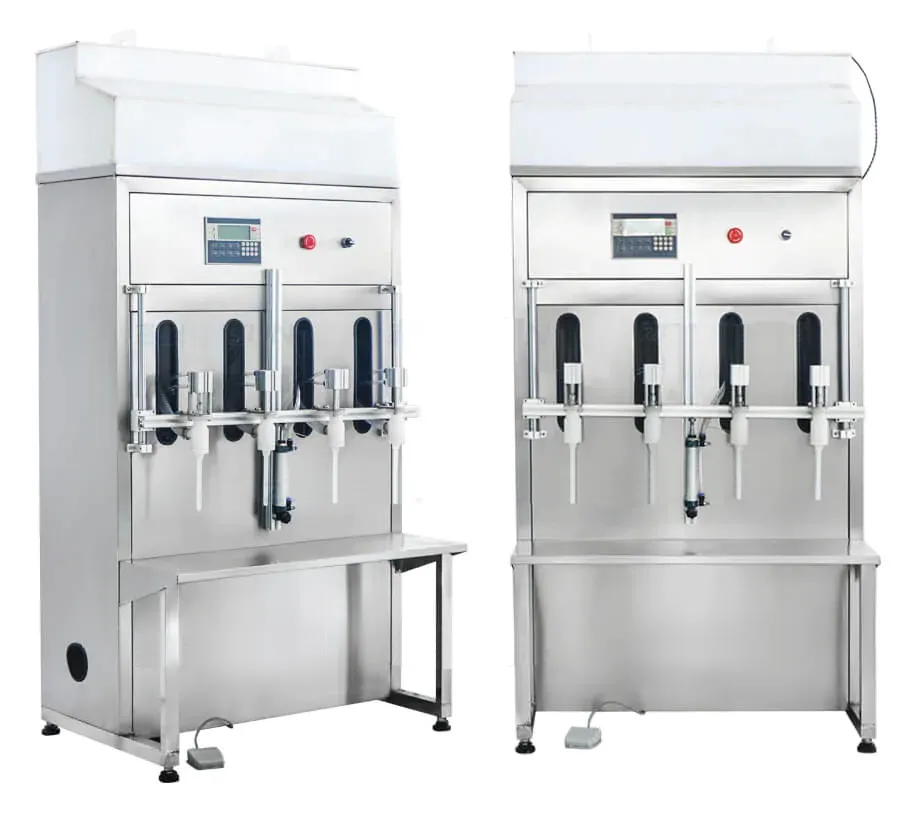
Key features
PP frame with PTFE/PVC in contact with liquid.
Nozzle count configurable to suit output.
Ø60–120 mm; 60–300 mm height.
Flexible fills for household and agrochem products.
Throughput varies by dose.
Live production data; multi‑language UI.
Technical information
Performance varies by product, container and setup. Ask for a timed trial or specification review.
| Model | LUYTCR4A |
|---|---|
| Method | Gravity; anti‑corrosion nozzles |
| Filling range | 100–3000 ml |
| Speed | ≈200–2500 bottles/hour (by volume) |
| Bottle size | Ø60–120 mm; H 60–300 mm |
| Nozzles | 4 (customizable) |
| Voltage | 110/220 V, 50–60 Hz |
| Power | ≈550 W |
| Air pressure | 0.4–0.7 MPa |
| Hopper size | ≈90 L |
| Machine size | ≈2000 × 1300 × 1900 mm |
| Weight | ≈200 kg |
Applications
Bleach, toilet cleaner, thinner.
Fertilizer and other caustic liquids.
Aggressive brines (compatibility dependent).
What is included
Related products
Automatic filling machines
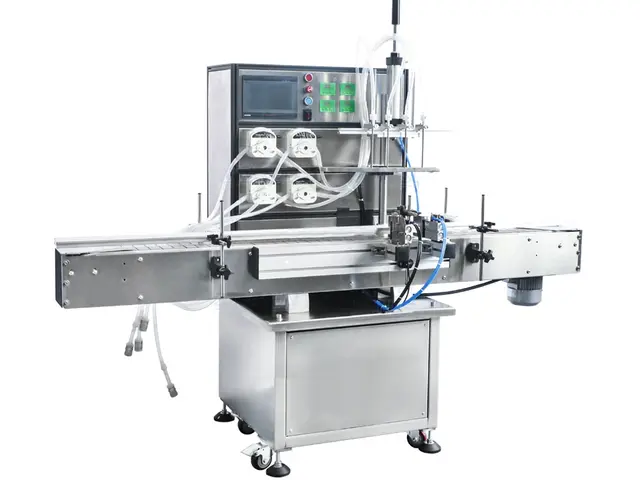
Automatic 4‑head diaphragm‑pump filler for gels, shampoo and detergents. Large 40 L/min flow rate supports ≈30–45 bpm with four…
View details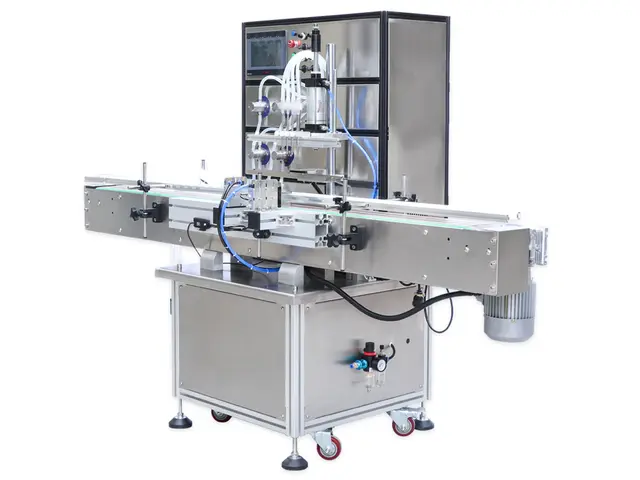
Automatic filling machines
Equipped with a gear pump, this liquid filling machine can work automatically. The machine can fill about 30 bottles/min (at 5L). Each…
View details
Automatic filling machines
Servo‑controlled peristaltic filler with touch HMI. Dosing volume is set directly on the screen—no need to time the fill. Four…
View detailsApplication and acceptance guidance
This automatic gravity machine is presented with a non-metal product-contact path for aggressive liquids. Material suitability must be confirmed for the exact chemical, concentration, temperature, exposure duration and cleaning agents. The review should include the hopper, hoses, seals, valves, nozzles, level devices, drains and any parts exposed to splash or vapour, not only the principal visible components.
Gravity filling also depends on product head and flow control. Source level, nozzle restriction, liquid viscosity and foaming can change fill time and shut-off. A trial should reproduce the planned hopper or feed condition and include low-level operation, normal stops and the container exterior after filling.
Build a product-contact list and obtain written compatibility evidence for product and cleaning conditions. Keep unknown materials as open actions. A generic “corrosion proof” description is not a substitute for this review.
Record product level, feed method and any pressure acting on the gravity circuit. Compare fills at the highest and lowest normal source levels and check each nozzle for consistent shut-off.
Review drip trays, drains, splash, ventilation and the route of filled containers to capping. Hazardous-area requirements, where applicable, must come from the site classification and wider project review.
Specification and trial evidence
The file should remain with the machine specification and be updated if formula or cleaning conditions change.
| Selection point | What to define or test | Why it matters |
|---|---|---|
| Chemical identity | SDS, concentration, impurities and product temperature | Defines the substance being assessed. |
| Cleaning | Agent, concentration, temperature, contact time and rinse | May be more aggressive than the production liquid. |
| Wetted materials | Hopper, hose, valve, seal, nozzle, sensor and fittings | Prevents an unreviewed component becoming the weak point. |
| Vapour and splash | Normal release, spill, capping delay and ventilation | Extends risk control beyond the liquid inside the hose. |
| Container | Material, opening, venting, rigidity and closure | Affects filling, chemical resistance and downstream containment. |
| Trial result | Fill, drip, foam, materials observation and clean-down | Provides evidence under the intended operating conditions. |
Buyer questions
No. Suitability depends on exact chemical, concentration, temperature, stress, exposure and cleaning agents. Verify each component with reliable material data.
Gravity head can change the flow and cut-off behaviour as product level changes. The control method should produce acceptable fills across the normal operating range.
Potentially, subject to the actual product, flow profile, nozzle and pack. A trial should measure foam, settling, drip and good output.
Send the current SDS, concentration, fill range, container and closure, output, cleaning process, feed arrangement and site classification where relevant.
No. Chemical compatibility and explosion protection are different requirements. Flammability and hazardous-area classification need a separate site-specific review.
Check swelling, softening, discolouration, leakage, seal condition, nozzle shut-off and any residue or vapour exposure. Longer-term compatibility may require additional evidence beyond a short trial.