
Diaphragm pump core
Stable flow for foamy and viscous liquids.
Automatic filling machines
Automatic 4‑head diaphragm‑pump filler for gels, shampoo and detergents. Large 40 L/min flow rate supports ≈30–45 bpm with four independently controlled nozzles.
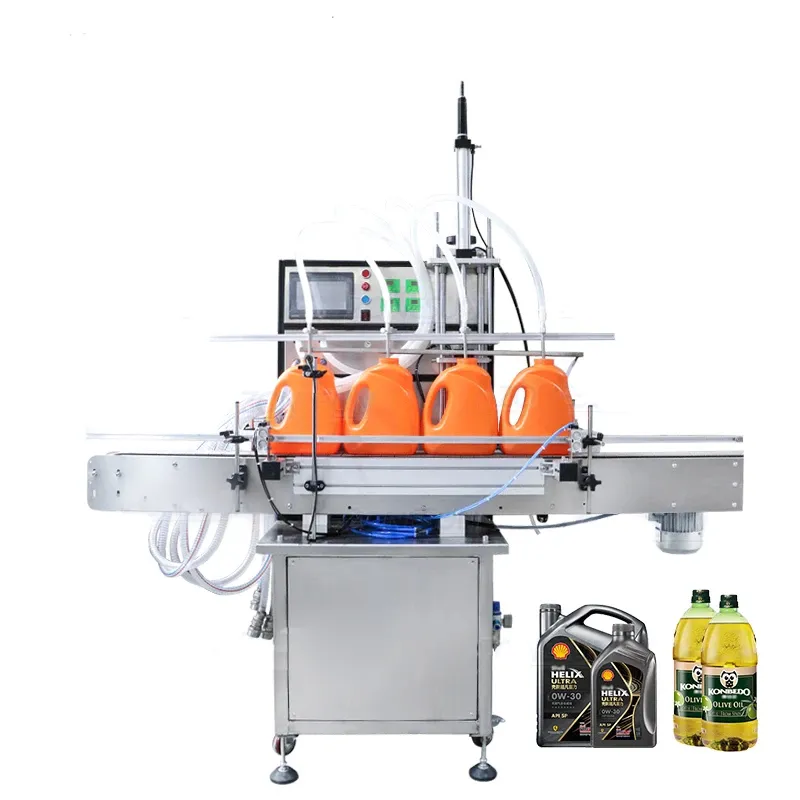
Key features
Stable flow for foamy and viscous liquids.
Reference speed depending on dose and bottle size.
Keeps pace with thicker products.
Set each head separately for consistent results.
Quick parameter setting and job change.
Chain conveyor integrates with cappers/labelers.
Technical information
Performance varies by product, container and setup. Ask for a timed trial or specification review.
| Model | LUVTDP40 |
|---|---|
| Nozzles | 4 (independent control) |
| Max flow | ≈40 L/min |
| Speed | ≈30–45 bottles/min |
| Suitable liquids | Gel, sanitizer, shampoo, detergent |
| Control | HMI + sensors |
| Voltage | AC 110/220 V, 50–60 Hz |
| Construction | Stainless frame |
| Conveyor | Integrated chain conveyor |
| Air | Typical plant air |
| Options | Nozzle size & count customization |
| Integration | Pairs with upstream mixers |
Applications
Shampoo, body wash, detergents.
Lotions and gels.
Thicker sauces (compatibility dependent).
What is included
Related products
Automatic filling machines
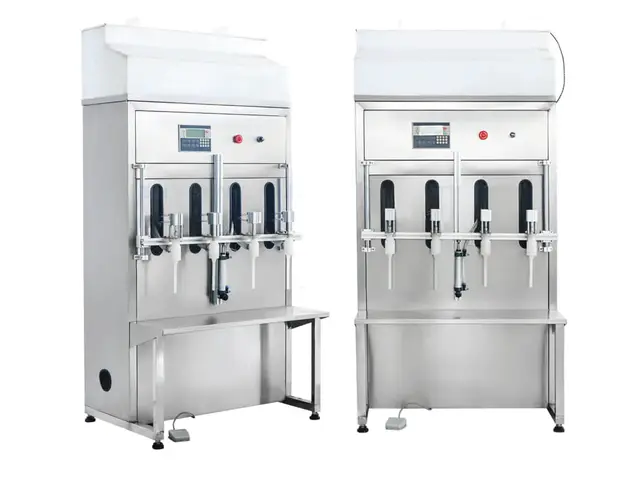
Automatic gravity filler engineered for corrosive liquids like bleach, acids and fertilizers. Non‑metal wetted parts (PP/PTFE/PVC)…
View details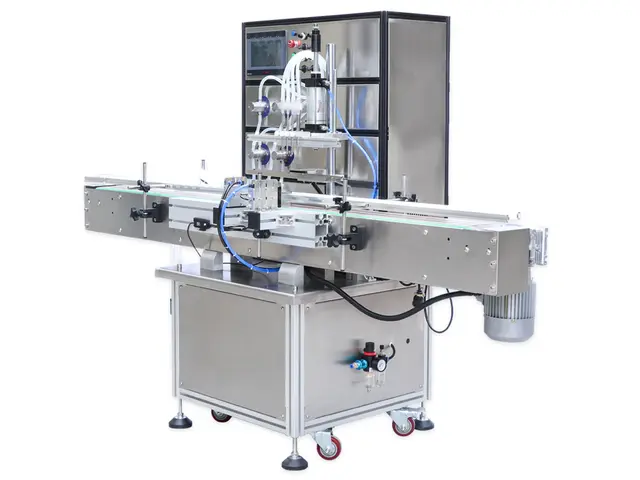
Automatic filling machines
Equipped with a gear pump, this liquid filling machine can work automatically. The machine can fill about 30 bottles/min (at 5L). Each…
View details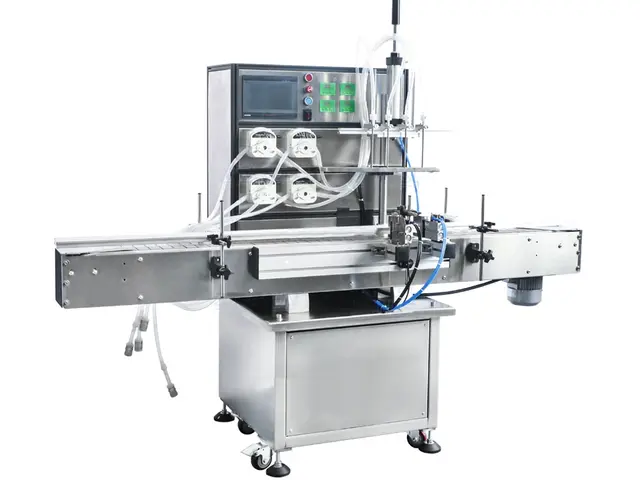
Automatic filling machines
Servo‑controlled peristaltic filler with touch HMI. Dosing volume is set directly on the screen—no need to time the fill. Four…
View detailsApplication and acceptance guidance
This automatic filler uses a diaphragm-pump core with four independently controlled nozzles and is presented for products including gels, shampoo and detergents. The existing flow and speed figures are reference values; actual performance depends on liquid viscosity, air supply, suction conditions, pump pulsation, nozzle restriction and the fill quantity.
A diaphragm pump can tolerate some challenging product conditions, but compatibility of diaphragms, seals, hoses and valves must be verified. The feed circuit should avoid drawing air or starving the pump. Where foam is present, the nozzle profile and flow may need to prioritise clean packs over the maximum pump rate.
Confirm plant-air pressure, quality and capacity under load, plus the pump manufacturer’s operating requirements. Record stroke or control settings and inspect diaphragms and valves according to the maintenance plan.
Use a suitable source, hose and filter arrangement. Pulsating flow can influence the end of fill and each head differently, so assess the complete circuit rather than quoting the pump’s maximum flow.
Calibrate and observe each nozzle for dose, timing, drip and container alignment. A common target should still produce documented head-by-head results.
Specification and trial evidence
Confirm the published application against the intended product and site utilities.
| Selection point | What to define or test | Why it matters |
|---|---|---|
| Material review | Product, cleaning agent and all diaphragm, seal, hose and valve materials | Confirms chemical suitability. |
| Air supply | Pressure and capacity while all heads and connected equipment operate | Prevents performance changing under plant demand. |
| Prime and source | Suction height, source level, hose and air-removal method | Creates stable inlet conditions. |
| Head calibration | Individual samples from each nozzle at required targets | Confirms balance and independent control. |
| Foam and shut-off | Observe bulk flow, final flow, drip and product level after settling | Produces clean, measurable packs. |
| Sustained output | Run with container feed and downstream constraints for an agreed period | Converts pump capability into good line output. |
Buyer questions
Many compatible gels, shampoos, detergents and liquids may be considered, subject to viscosity, solids, chemistry, foam, dose and required flow. A representative sample is needed.
Yes. Air pressure and available capacity influence pump cycling. Test while other connected pneumatic equipment is operating, not only with an unloaded air supply.
Hose arrangement, pump control, damping where applicable and nozzle timing can influence the delivered flow. The final dose should be verified at every head.
Potentially, with a suitable flow and nozzle profile. Measure foam, settled level, pack cleanliness and good output using the real detergent.
Sample each nozzle separately under the same product and source conditions, then verify combined running and the response to a disabled or faulted head.
Keep diaphragm and valve inspection or replacement records, air-supply checks, calibration results and the approved product-contact material list.