
Why compact machinery works for growing brands
A compact liquid filler can improve consistency without the footprint and cost of a fully automatic line. It can also help prove a process before a larger investment.
Compact filling machines
Compact fillers offer a bridge between hand filling and a full production line. They are useful for start-ups, laboratories, specialist products and manufacturers with limited floor space or frequent product changes.
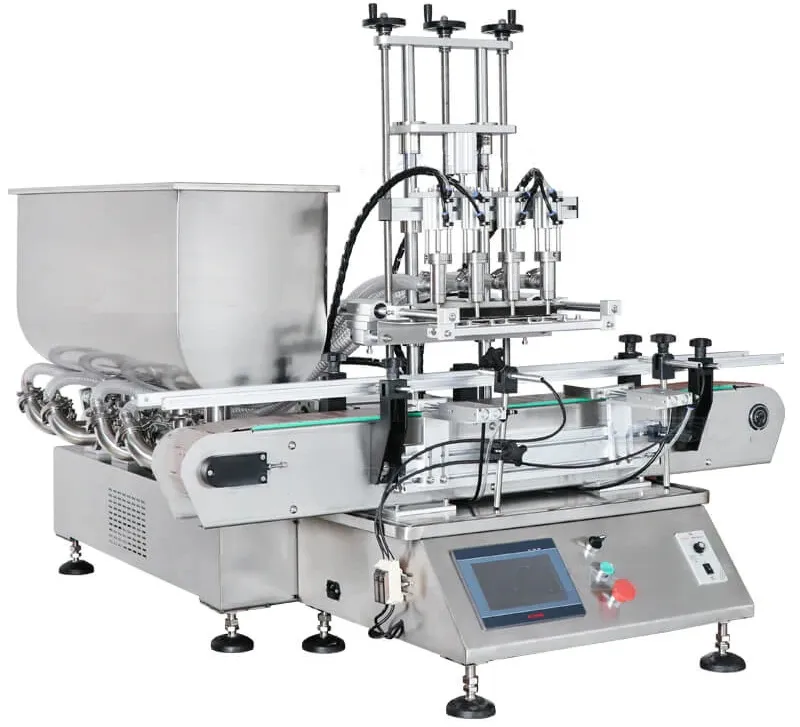
Specification guide
These notes are written for buyers comparing filling machinery options before requesting a quotation.
A compact liquid filler can improve consistency without the footprint and cost of a fully automatic line. It can also help prove a process before a larger investment.
Desktop systems may suit smaller batches or laboratory-style work. Compact automatic fillers can add conveyor handling and multiple filling heads while staying smaller than a full industrial line.
The best compact filler should match today’s product and containers while leaving a clear route to larger-volume production if demand increases.
Key considerations
Useful where production space is limited.
Suitable for shorter runs and multiple SKUs.
Peristaltic and volumetric tabletop formats can suit smaller containers.
A compact filler can validate the process before moving to full automation.
Relevant machines
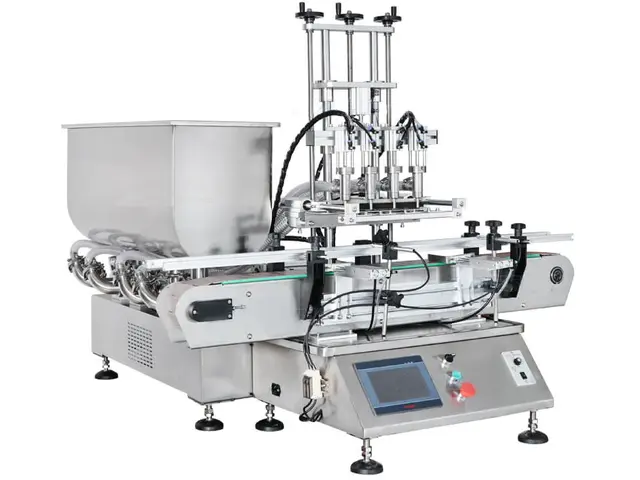
Compact filling machines
Tabletop 2–4 head piston filler for soaps, shampoos and viscous liquids. Accurate volumetric dosing with ≤±1% typical accuracy.
View details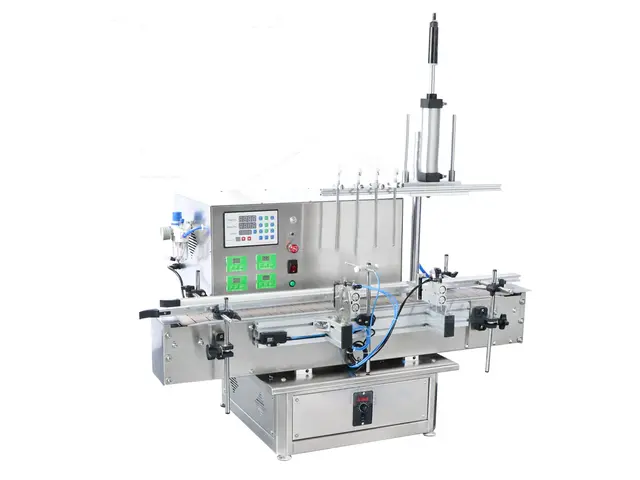
Compact filling machines
Desktop automatic peristaltic filler with 4 nozzles. Each head has an independent pump (≈60 W) delivering up to ≈4000 ml/min; ≈30–50 bpm depending on bottle and liquid.
View details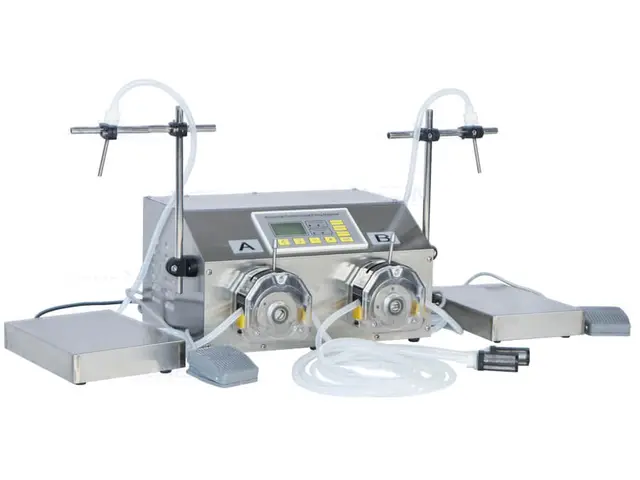
Semi-automatic filling machines
Double‑head semi‑automatic peristaltic filler for large bottles and jugs. High flow (≈12 L/min × 2) with tubing‑only contact makes quick, hygienic changeovers.
View details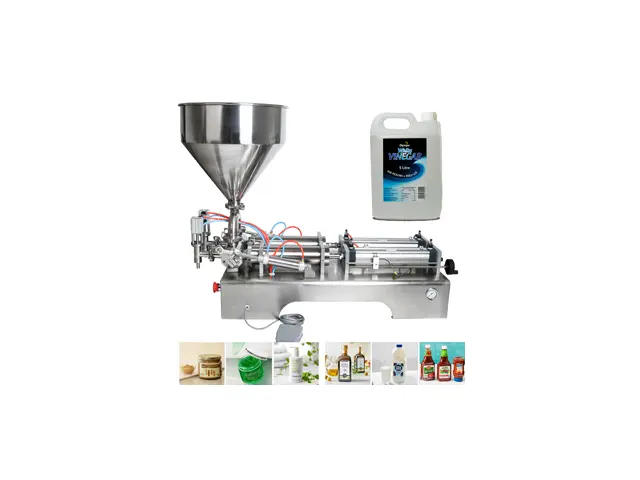
Semi-automatic filling machines
The semi-automatic system offers separate machines each requiring manual product placement but still affording a very significant improvement in production rates compared to manual…
View details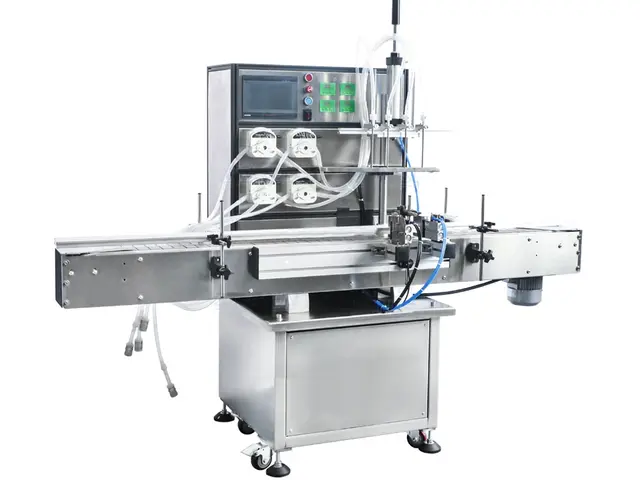
Automatic filling machines
Servo‑controlled peristaltic filler with touch HMI. Dosing volume is set directly on the screen—no need to time the fill. Four peristaltic channels keep product inside disposable t…
View detailsRelated guides
FAQ
Start-ups, labs, small manufacturers and companies with limited space or frequent product changes often benefit from compact filling machinery.
Yes. Some compact machines include conveyor handling and multiple filling heads.
They can be accurate when correctly matched to the product, fill volume and container.
Speak to Lancing
Tell us the liquid, container, fill range and target output. Lancing will recommend a practical semi-automatic, compact or fully automatic option.
Compact work-cell design
Compact machinery can bridge the gap between a manually presented semi-automatic filler and a longer fully automatic line. The reduced footprint is useful only when there is still enough space for product supply, empty and full containers, operator access, cap handling, sampling and safe cleaning.
The strongest compact cell defines what remains manual and what is automated. An inline filler may index and dose automatically while an operator loads containers or applies caps. The operator cycle, buffer space and refill method should therefore be timed alongside the machine cycle.
Use a layout that shows machine envelope, guarding, electrical access, hose routes, product vessel, operator position and maintenance clearances. A compact machine should not depend on blocked doors or awkward lifting during normal cleaning.
Small machines are still affected by suction lift, head pressure, hose diameter and air ingress. Decide whether product is supplied from a local vessel, drum, IBC or pump and include replenishment in the production study.
Record container guides, control interfaces, recipe logic and target line direction if future capping or labelling is likely. Designing those interfaces early can make later expansion more orderly, although suitability must be confirmed for the chosen machine.
Specification and trial evidence
These questions define what the machine does and what still relies on the operator or surrounding equipment.
| Selection point | What to define or test | Why it matters |
|---|---|---|
| Container loading | Manual placement, short infeed conveyor or connection to an existing line? | Sets buffer size, sensing and operator work content. |
| Filling cycle | Single or multiple heads, stop-and-fill or tracking, and required nozzle movement? | Determines cycle balance and footprint. |
| Closure handling | Manual closure placement, assisted capping or automatic cap feed? | Often becomes the limiting operation in a compact cell. |
| Product replenishment | How often is product added and can the feed remain stable while filling? | Prevents hidden downtime and dose variation. |
| Quality checks | Where are samples weighed or inspected and how are rejects segregated? | Keeps inspection from interrupting the main flow. |
| Future interfaces | What signals and physical transfer points may be needed later? | Supports planned expansion without claiming that every compact machine can be converted. |
Buyer questions
It is a smaller-footprint filling arrangement, often combining automated dosing and container movement in a short cell. The exact level of automation varies, so the operator tasks should be listed explicitly.
It can reduce manual presentation and improve rhythm, but actual good output depends on fill time, container loading, closure application, product replenishment and downstream handling.
Potentially, subject to nozzle reach, guide adjustment, sensing and stability. Review the complete range and identify any change parts or recipe verification needed.
Allow for operating position, empty and full pack buffers, product supply, cleaning, electrical access, guarding and maintenance. The machine footprint alone is not the installation footprint.
They may be integrated as part of a compact line where container transfer, speed and controls are compatible. The required operations should be declared at the first specification stage.
Measure filler performance and the complete operator cycle, including loading, cap handling, sample checks, replenishment, stoppage recovery and changeover.