
How peristaltic filling works
The pump compresses tubing to move liquid forward. Changing the tubing can simplify product changeover and reduce cleaning time, provided the tubing is compatible with the liquid.
Peristaltic filling machines
Peristaltic fillers move liquid through flexible tubing, keeping the product away from the pump body. This can be useful for high-value liquids, frequent changeovers and products where clean contact paths matter.
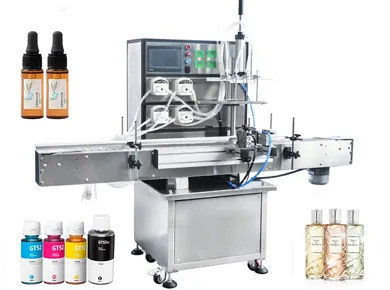
Specification guide
These notes are written for buyers comparing filling machinery options before requesting a quotation.
The pump compresses tubing to move liquid forward. Changing the tubing can simplify product changeover and reduce cleaning time, provided the tubing is compatible with the liquid.
Peristaltic filling is often reviewed for perfumes, essential oils, toners, serums, reagents, small bottles and other low-to-medium-viscosity liquids.
Very thick liquids, particulates or aggressive chemicals may require careful tubing selection or a different pump type. Flow rate and tubing life should be checked during specification.
Key considerations
Product contacts the tubing rather than the pump body.
Tubing changes can reduce cleaning between products.
Useful for smaller bottle sizes and high-value liquids.
Available as tabletop, compact and automatic multi-head configurations.
Relevant machines
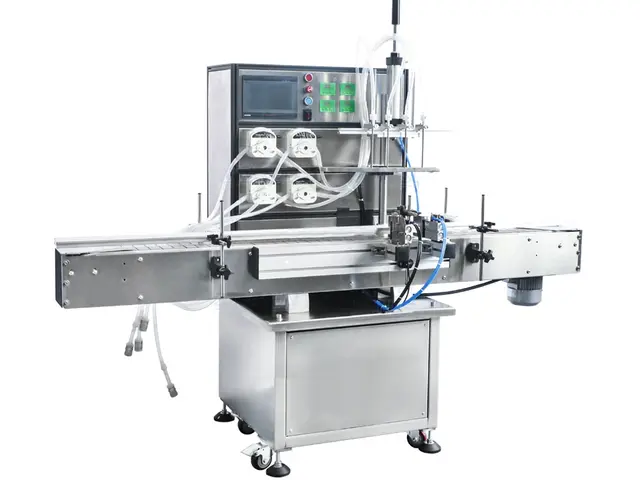
Automatic filling machines
Servo‑controlled peristaltic filler with touch HMI. Dosing volume is set directly on the screen—no need to time the fill. Four peristaltic channels keep product inside disposable t…
View details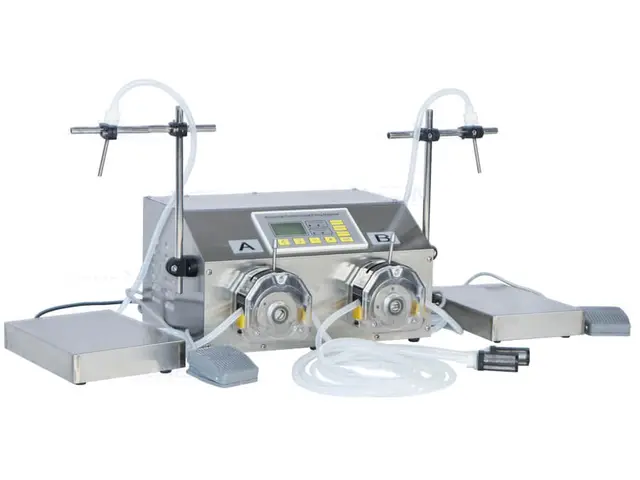
Semi-automatic filling machines
Double‑head semi‑automatic peristaltic filler for large bottles and jugs. High flow (≈12 L/min × 2) with tubing‑only contact makes quick, hygienic changeovers.
View details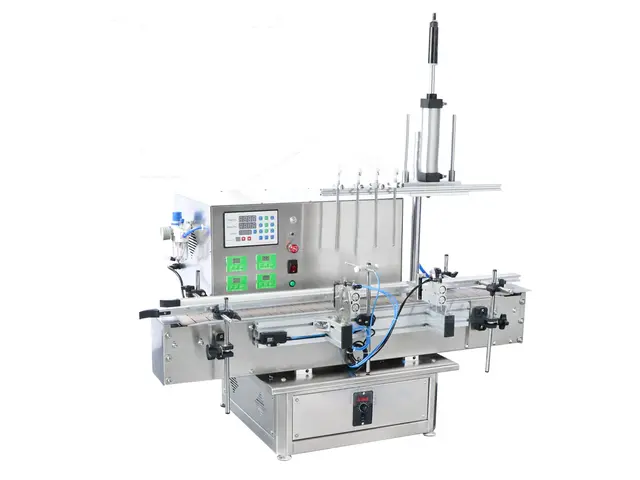
Compact filling machines
Desktop automatic peristaltic filler with 4 nozzles. Each head has an independent pump (≈60 W) delivering up to ≈4000 ml/min; ≈30–50 bpm depending on bottle and liquid.
View details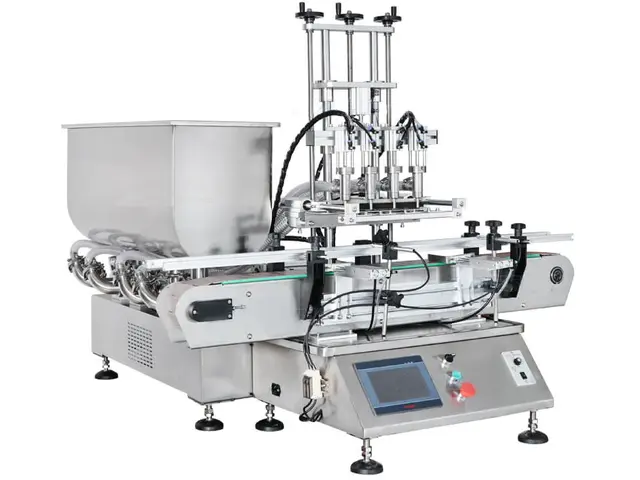
Compact filling machines
Tabletop 2–4 head piston filler for soaps, shampoos and viscous liquids. Accurate volumetric dosing with ≤±1% typical accuracy.
View details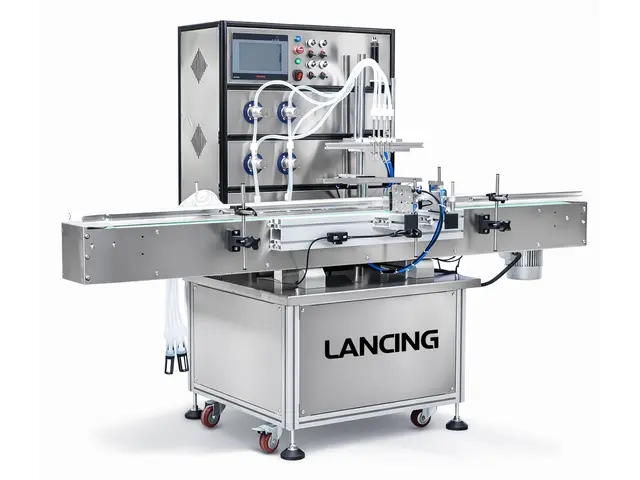
Liquid filling machines
Liquid filling machines configured for free-flowing, foamy, corrosive, hygienic or high-value liquids in bottles, vials, jerrycans and buckets.
View detailsRelated guides
FAQ
Small-dose liquids such as perfumes, oils, toners, reagents and compatible low-viscosity products are common candidates.
The product-contact path is the tubing, which can support clean changeovers when tubing material is suitable.
Yes. Peristaltic filling can be supplied in semi-automatic, compact and fully automatic formats.
Speak to Lancing
Tell us the liquid, container, fill range and target output. Lancing will recommend a practical semi-automatic, compact or fully automatic option.
Tubing-based metering
In a peristaltic filler, rotating rollers compress flexible tubing and move product without the liquid contacting the pump mechanism. This can simplify product isolation and changeover, especially for clean, lower-viscosity liquids and smaller doses. The tube is not merely a consumable hose: its bore, wall, material, compression and condition influence the volume delivered per revolution.
A representative trial should therefore record the exact tube specification, product temperature, suction lift, source vessel, priming method and any bubbles in the line. Multi-head systems also need each channel calibrated under the same conditions. Replacing tubing or changing the route can require verification before production resumes.
The tube must be compatible with product and cleaning chemicals while providing stable recovery after each roller pass. Age, compression set, temperature and chemical exposure can alter flow. Define inspection and replacement criteria rather than relying only on elapsed time.
Air pockets change the liquid volume in a given tube length and can disrupt small doses. Keep connections tight, minimise unnecessary suction lift and define how channels are primed, checked and cleared after a product change.
Calibrate each head using the agreed product and measurement method. Check warm-up, repeated fills, restart after a pause and performance after tube replacement. A common motor setting does not guarantee identical output from every tube path.
Specification and trial evidence
Recording these variables makes a successful sample trial transferable to production setup and maintenance.
| Selection point | What to define or test | Why it matters |
|---|---|---|
| Tube | Material, internal diameter, wall, length, lot and routing | Defines the metering element and allows replacements to be verified. |
| Product | Temperature, viscosity, density, surface tension and sensitivity to air | Explains changes in suction, bubbles, drip and measurement. |
| Source | Vessel level, suction height, filter, connection and refill method | Controls inlet conditions and channel-to-channel consistency. |
| Pump profile | Speed, acceleration, deceleration, reversal or suck-back and pause time | Influences dose, nozzle shut-off and cycle time. |
| Nozzle | Internal diameter, length, height and shut-off arrangement | Affects back pressure, drip control and placement into the container. |
| Verification | Target, instrument, sample size, calibration calculation and recheck frequency | Defines how the process remains approved after setup changes. |
Buyer questions
Suitability depends on viscosity, chemical compatibility, particles, dose and required flow. Clean, lower-viscosity liquids and smaller doses are common applications, but the actual product should be tested with the proposed tube and nozzle.
The product normally remains inside the flexible tubing and connected product path, while the rollers act on the outside of the tube. Other components such as nozzles and connectors may still be product-contact parts.
Internal diameter, wall thickness, material recovery, routing and compression affect the displaced volume. Use the specified tube and verify calibration after replacement.
Use sound connections, suitable suction conditions, controlled priming and a product source that does not draw a vortex or run low. Bubbles already present in the product may require a wider process review.
They can share recipe values, but each channel should be verified because tube and route variation can affect the delivered amount. Calibration and sample checks should identify head-specific adjustment.
The product path can often be replaced or cleaned in place according to the tube, connectors, nozzle and product requirements. Define how residual product is removed and how the approved setup is restored afterward.
Buyer questions
The tube is both part of the product path and the metering mechanism.
Tubing bore changes the displaced volume per pump movement and the resistance through the path. A larger bore may move more product but can alter priming, shut-off and minimum practical dose; a smaller bore can restrict viscous flow. Tube material, wall thickness and pump head must be considered together and calibrated with the production liquid.
Treat tubing as a controlled consumable when its material, dimensions, installation position and service condition affect the dose or product compatibility. Define the approved tube, replacement trigger, storage and setup check. A tube that looks similar may compress differently. Post-change calibration and first-fill checks should form part of the operating procedure.
Channels can differ because of tube tolerances, wear, installation tension, trapped air, roller condition, hose length, nozzle restriction or channel calibration. Collect head-identified sequential results and swap components methodically where appropriate. A single combined average can hide one channel consistently high or low.
Route tubing to avoid unnecessary high points, place the pickup securely in representative product and prime at a controlled rate while observing the complete path. Allow bubbles to clear before calibration, then stop and restart to check drain-back. The air-bubble guide helps identify persistent sources.
Peristaltic application checks
Peristaltic filling isolates the product in flexible tubing, but tubing choice, temperature, suction conditions and the complete product path still determine repeatability and maintenance needs.
Peristaltic filling can provide a gentle, contained product path, but suitability depends on tube compression, speed, suction lift, restrictions and any upstream transfer equipment. The complete path should be reviewed for products sensitive to aeration, texture change or cell damage. A representative trial is more reliable than choosing solely from the pump name.
Peristaltic tube life depends on tube material, size, compression, pump speed, product chemistry, temperature, cleaning method and operating hours. The correct tube must be verified for product compatibility and the supplied pump head. Inspection and replacement criteria should be defined before production rather than waiting for visible failure or fill drift.
Residual product is mainly determined by the length and internal volume of the tubing, suction arrangement, manifold or nozzle, and the chosen drain-down or recovery method. A short, simple product path can reduce hold-up, but the result should be measured using the production configuration and a defined end-of-batch procedure.
Temperature can change product viscosity, tube flexibility, suction behaviour and nozzle shut-off. Trials should cover the realistic production temperature range, particularly where product cools between preparation and filling. Tube material limits and cleaning temperatures must also be confirmed separately from the product fill temperature.