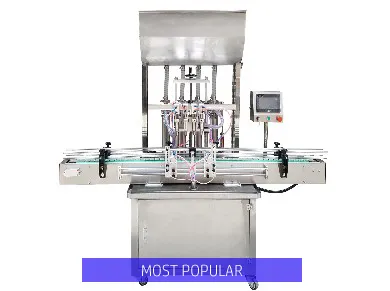
Liquid filling machines UK

Liquid filling machines for bottles, jars, cans and containers.

Lancing supplies liquid filling machines for production teams that need repeatable filling accuracy, practical changeovers and the option to scale from a semi-automatic machine to a fully automatic filling line.

Liquid filling machines for bottles, jars, cans and containers.

Specification guide

How to choose the right system.

These notes are written for buyers comparing filling machinery options before requesting a quotation.

Choosing the right liquid filling method

The correct filler depends on viscosity, foaming behaviour, product compatibility, fill volume, container shape and target output. Free-flowing liquids may suit peristaltic, gear pump, gravity or flow-meter filling. Thicker liquids, creams and sauces often suit piston, volumetric or rotor-lobe filling. Corrosive liquids require careful wetted-part selection, while flammable liquids may require ATEX assessment.
Information needed for a reliable quotation

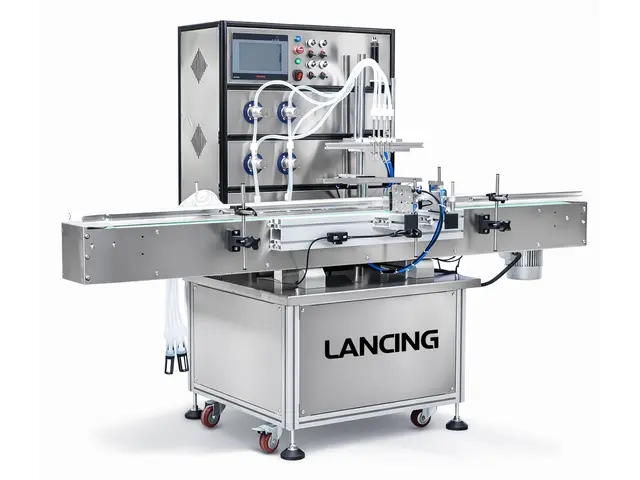
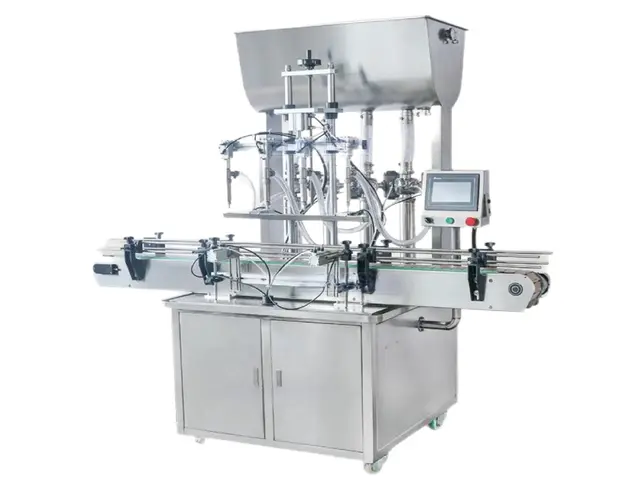
For a useful machine recommendation, prepare the product name, fill range, container dimensions, cap or closure type, expected bottles per minute and any hygiene, hazardous-area or clean-down requirements. These details help determine the number of filling heads, nozzle type, pump technology, conveyor layout and whether capping or labelling should be integrated.

Why buyers choose a machinery specialist

A filling machine is normally part of a wider packaging process. Lancing can review the liquid, container and production target before specifying a standalone filler, compact automatic machine or full production line with capping, labelling, conveyors and accumulation.

Key considerations

What affects the machine specification?

Free-flowing liquids

Peristaltic, diaphragm, gravity, gear-pump and flow-controlled systems can suit water-like or low-viscosity products.

Viscous products

Piston, volumetric, heated hopper and rotor-lobe configurations support creams, sauces, gels and pastes.

Small to large containers

Machines can be specified for small bottles, jars, jerrycans, buckets and larger industrial containers.

Production scaling

Start with semi-automatic filling, then step up to compact or fully automatic lines as output grows.

Relevant machines

Lancing filling machinery to review.

View all products
Liquid Filling Machinery product image

Liquid filling machines

Liquid Filling Machinery

Liquid filling machines configured for free-flowing, foamy, corrosive, hygienic or high-value liquids in bottles, vials, jerrycans and buckets.

View details
Automatic Peristaltic Filling Machine product image

Automatic filling machines

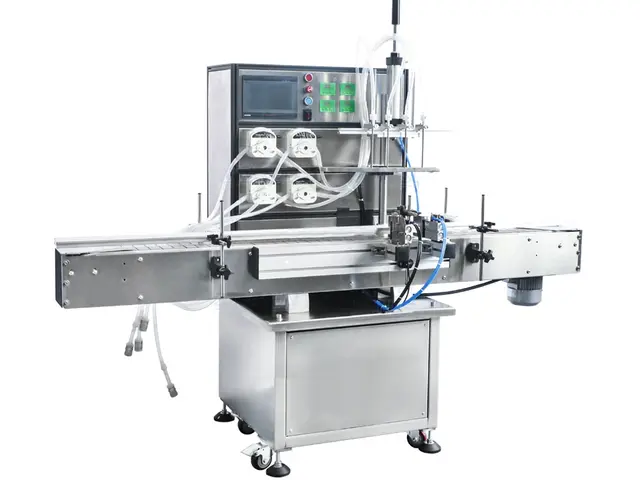
Automatic Peristaltic Filling Machine

Servo‑controlled peristaltic filler with touch HMI. Dosing volume is set directly on the screen—no need to time the fill. Four peristaltic channels keep product inside disposable t…

View details
Semi Automatic Volumetric Filling Machines product image

Semi-automatic filling machines

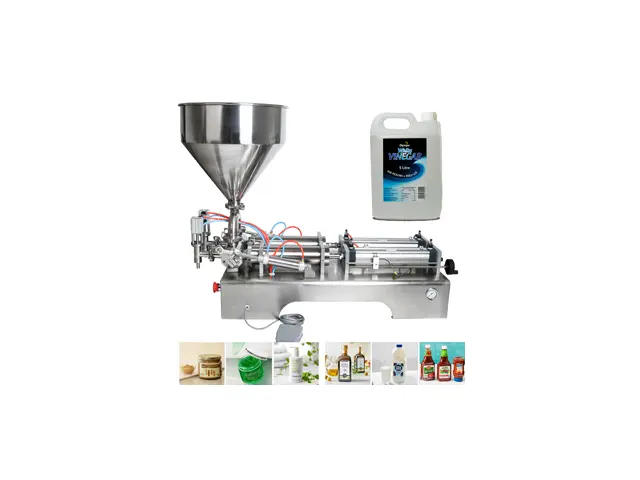
Semi Automatic Volumetric Filling Machines

The semi-automatic system offers separate machines each requiring manual product placement but still affording a very significant improvement in production rates compared to manual…

View details
Semi Automatic Vacuum Filling Machines product image

Semi-automatic filling machines

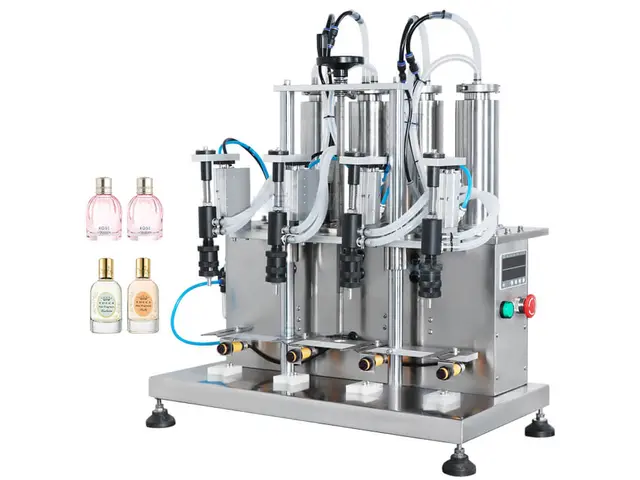
Semi Automatic Vacuum Filling Machines

Overflow Vacuum Fillers are designed to fill to a level rather than to dispence a specific volume of liquid. Ideal for applications with inconistent glass bottles where the level a…

View details
Automatic Gear Pump Filling Machines product image

Automatic filling machines

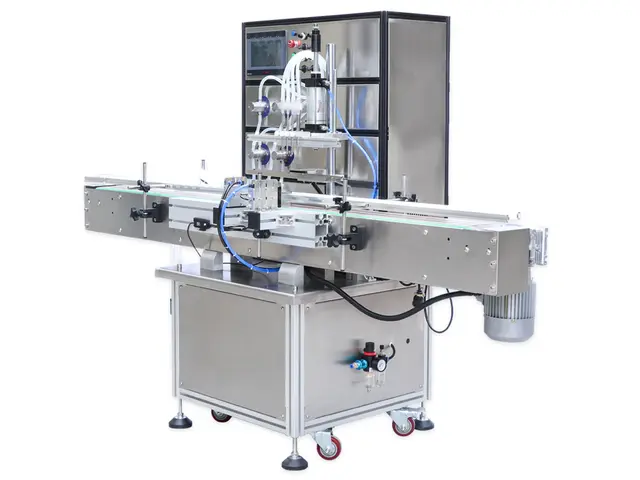
Automatic Gear Pump Filling Machines

Equipped with diaphragm pump, this liquid filling machine can work automatically. The machine can fill about 30 bottles/min (at 5L). Each filling nozzle of this machine can be cont…

View details

FAQ

Common questions.

What is the best liquid filling machine for my product?

The best machine depends on viscosity, fill volume, container type, accuracy requirement and output target. Lancing can review those details and recommend a suitable method.

Can a liquid filler handle different bottle sizes?

Many systems can be configured for multiple container sizes, but change parts, nozzle settings and conveyor handling need to be checked against the actual containers.

Do I need a semi-automatic or automatic filler?

Semi-automatic machines suit lower-volume or varied production. Fully automatic machines suit higher output, repeatability and integration with capping, labelling and conveyors.

Speak to Lancing

Need help specifying a filling machine?

Tell us the liquid, container, fill range and target output. Lancing will recommend a practical semi-automatic, compact or fully automatic option.

Liquid and pack compatibility

Select the dosing method and container-handling method as one process.

A liquid filler has to deliver the required quantity and leave a pack that can move cleanly to the next operation. Product behaviour controls the pump, piston, flow path and nozzle; pack geometry controls neck access, sensing, stability and transfer. Treating either side in isolation can produce accurate laboratory fills but unreliable production.

The selection should cover the entire operating range. Include the thinnest and thickest product condition, smallest and largest dose, most unstable container and the most demanding changeover. This shows whether one configuration genuinely covers the range or whether separate product-contact sets or machines are more practical.

Flow and metering

Free-flowing products may suit gravity, flow-meter, diaphragm or gear-pump routes. Viscous or particulate products can favour positive-displacement systems with larger passages. Small clean doses may benefit from peristaltic tubing. Each route should be tested under its expected feed condition.

Nozzle behaviour

A nozzle can be a simple open tube, a positive shut-off design, a diving assembly or part of a level-filling process. Select it around opening size, foam, splash, stringing, particles and the need to keep the outside of the pack clean.

Container movement

Manual nests, star wheels, gates, timing screws and tracking conveyors serve different production formats. Test bottle variation, flexible walls, tall packs and full-container stability before fixing guide dimensions and line speed.

Specification and trial evidence

Match liquid behaviour to the engineering questions, not to a label alone.

The same product family can cross several categories as temperature, formulation or fill size changes.

Selection pointWhat to define or testWhy it matters
Water-like, non-foamingCan gravity or a controlled pump fill without splash and stop cleanly?Check head pressure, nozzle size and the effect of changing source level.
Foaming liquidCan flow be profiled and the nozzle kept beneath the rising surface?Assess foam at the required output and after the agreed settling time.
Viscous or stringingCan the product feed consistently and can the nozzle break the product tail?Check temperature, pressure, shut-off, suck-back and residual product.
Liquid with particlesCan the largest particle pass every valve, hose and nozzle without damage?Use representative particle distribution and avoid only testing filtered liquid.
Small high-value doseCan priming, tubing volume and residual product be controlled?Measure yield as well as individual fill results.
Large containerCan the pack be positioned, weighed or filled safely and then removed?Include tare variation, splash, full-pack mass and downstream handling.

Buyer questions

Questions to resolve before the specification is fixed.

Can the same filler handle thin and thick liquids?

Sometimes, but the useful range depends on pump or piston sizing, valves, hosework, nozzle and product supply. Test both ends of the viscosity range at their normal temperature.

How is a bottle filler kept drip-free?

Positive shut-off, suck-back, controlled deceleration, nozzle selection and reducing residual pressure can help. “Drip-free” should be assessed with the actual product after repeated cycles and line stops.

What bottle samples should be supplied?

Provide production-quality samples covering size and manufacturing variation, plus closures and any labels that affect sensing or handling. Include lightweight or unstable variants.

Is fill-by-volume or fill-by-weight better?

Neither is universally better. The choice depends on the commercial measure, density stability, container tare, required accuracy, dose size and production format.

What affects changeover time?

Product drainage, cleaning, hose or tube replacement, nozzle and guide changes, recipes, calibration and verification all contribute. Define changeover from last good pack to first approved pack.

Can the filler connect to capping and labelling equipment?

Yes, provided the pack remains stable and the line includes appropriate accumulation, signals, speed balance and fault handling. Integration should be considered during specification.