
Do not treat ATEX as an add-on
If a liquid or filling area is classified as hazardous, the machinery specification must consider electrical protection, pneumatics, earthing, product handling and the working environment from the beginning.
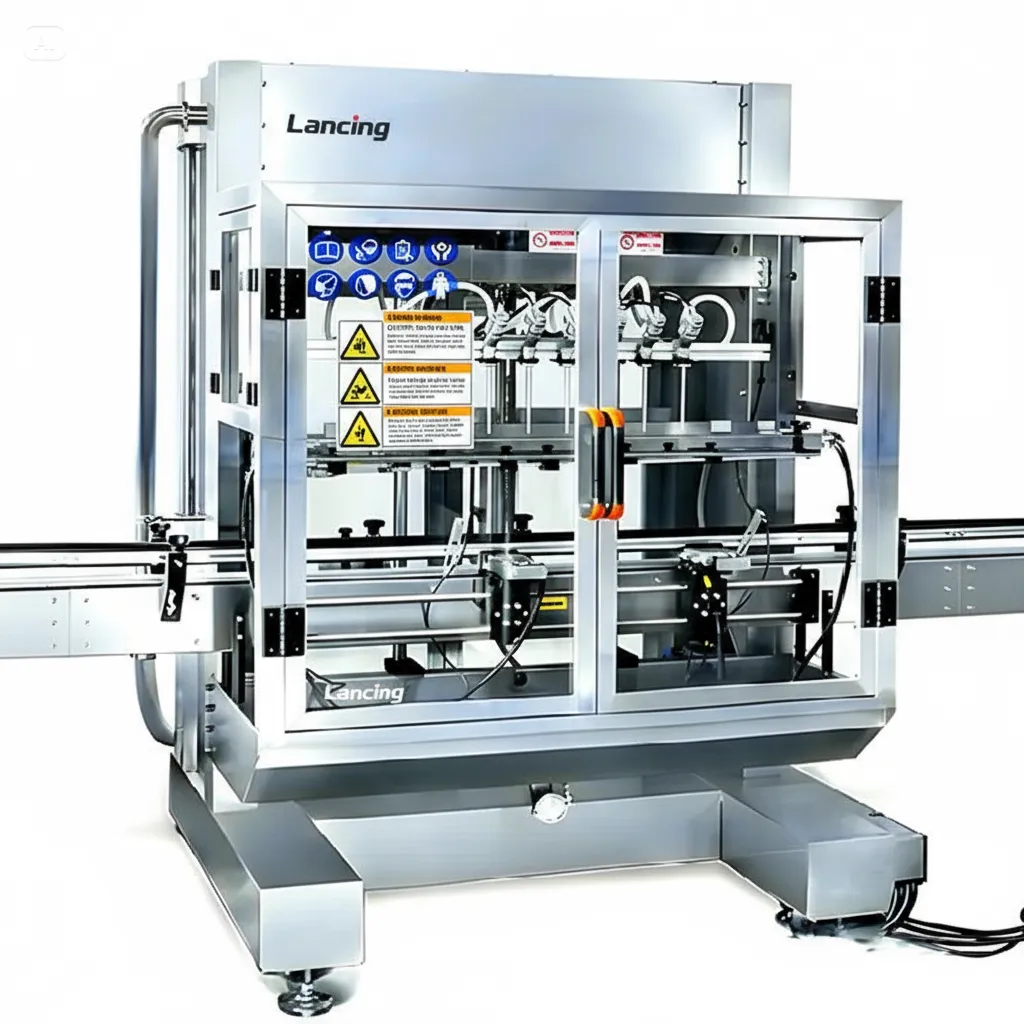
ATEX filling machines
Flammable liquid filling should be reviewed against the product, vapour risk and site zoning. Lancing can discuss ATEX filling requirements for solvents, alcohol-based products and other hazardous-area applications.
Specification guide
These notes are written for buyers comparing filling machinery options before requesting a quotation.
If a liquid or filling area is classified as hazardous, the machinery specification must consider electrical protection, pneumatics, earthing, product handling and the working environment from the beginning.
Provide the safety data sheet, container details, fill volume, area classification, production rate and any extraction or site safety requirements. This allows the machinery approach to be reviewed responsibly.
Capping, labelling, conveyors and control systems may also need consideration when a filling line operates in or near a hazardous area.
Key considerations
Solvents, alcohol-based products and similar materials require review.
The site zone and product data guide equipment specification.
Filling, conveyors, capping and controls may all need assessment.
Discuss product and site requirements before assuming a standard filler is suitable.
Relevant machines
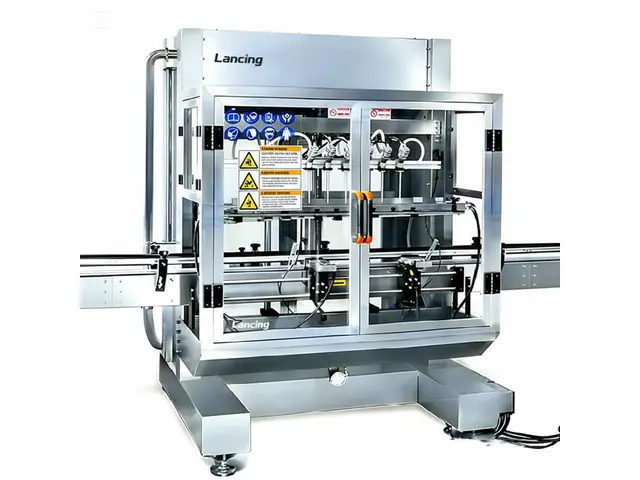
ATEX filling machines
Automatic filling platform engineered for flammable solvents in zoned environments. Explosion‑protected electricals and pneumatic actuation reduce ignition risks and support compli…
View details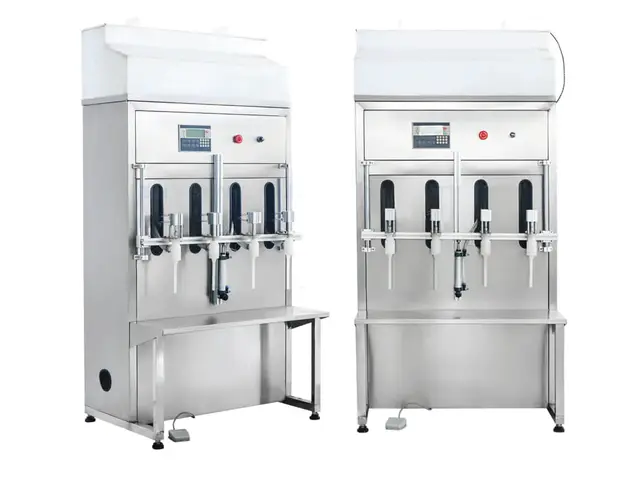
Automatic filling machines
Automatic gravity filler engineered for corrosive liquids like bleach, acids and fertilizers. Non‑metal wetted parts (PP/PTFE/PVC) protect product quality and machine life.
View details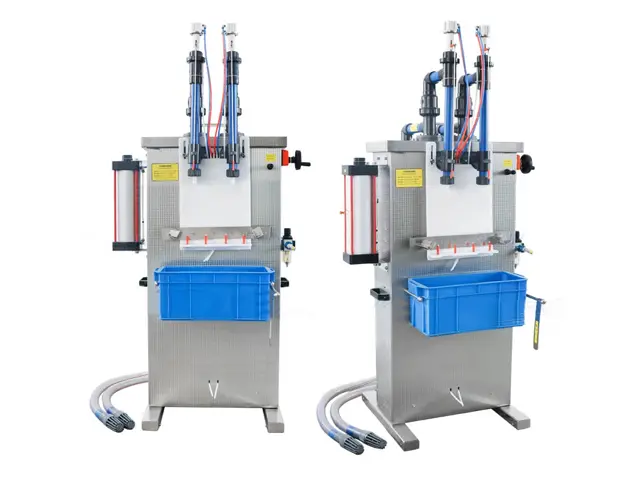
Semi-automatic filling machines
Fully pneumatic, double‑head filler engineered for corrosive liquids like toilet cleaner and acids. All wetted parts are plastic to resist HCl and similar chemicals.
View details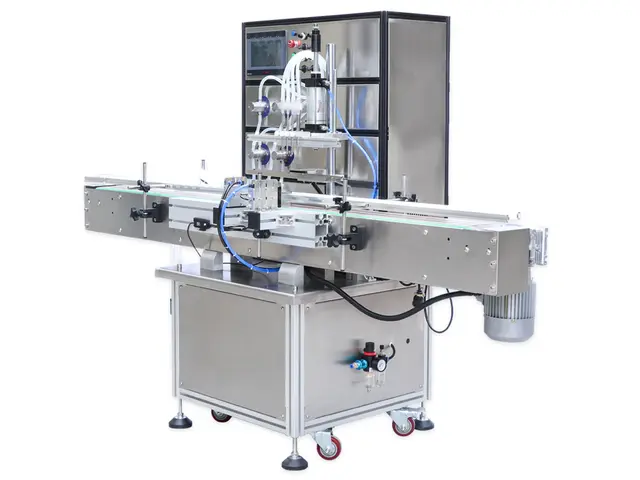
Automatic filling machines
Equipped with a gear pump, this liquid filling machine can work automatically. The machine can fill about 30 bottles/min (at 5L). Each filling nozzle of this machine can be cont…
View detailsRelated guides
FAQ
ATEX relates to equipment and protective systems for potentially explosive atmospheres. The machine and working area must be reviewed together.
Not automatically. Flammable products and zoned environments may require ATEX-rated equipment and site-specific review.
A safety data sheet, area classification, fill volume, container details and target output are important starting points.
Speak to Lancing
Tell us the liquid, container, fill range and target output. Lancing will recommend a practical semi-automatic, compact or fully automatic option.
Hazardous-area project definition
A flammable liquid does not by itself define the machinery requirement. The site operator’s risk assessment and hazardous-area classification establish where an explosive atmosphere may occur, its extent and the equipment categories or protection concepts required. The filling machine must be reviewed as part of that installation, together with product supply, extraction, conveyors, capping, controls, earthing and any equipment entering the classified area.
The first engineering pack should include the current safety data sheet, product concentration and temperature, flash-point information where available, cleaning chemicals, site zoning drawings and the customer’s electrical and mechanical standards. Lancing can then discuss a filling route without assuming that a general machine description proves suitability for a particular hazardous location.
Confirm who owns the hazardous-area classification, the zone at each part of the process and whether vapour can migrate beyond the immediate fill point. Include normal operation, spill, cleaning and maintenance states rather than only steady production.
Review hoses, seals, valves, pump, nozzle, vessel, drains and containment against the product and cleaning agents. Compatibility is not limited to visible stainless-steel parts and should include temperature and exposure duration.
The project review may include electrical equipment, hot surfaces, mechanical sparks, static charge, bonding, earthing and conductive product paths. Requirements must come from the site risk assessment and applicable project standards, not from a generic web claim.
Specification and trial evidence
Unknown cells should remain open actions in the project specification rather than being filled with assumptions.
| Selection point | What to define or test | Why it matters |
|---|---|---|
| Product evidence | SDS, composition or concentration, normal and abnormal temperature, vapour and cleaning information | Defines the substance hazards and material-compatibility review. |
| Area classification | Zone, gas or vapour group, temperature class and drawing showing boundaries | Defines where particular equipment requirements apply. |
| Process release | Open filling, closed connection, venting, splash, spill and container changeover | Helps identify credible release points and containment needs. |
| Product supply | Source vessel, pump, hose route, valves, return line and low-level behaviour | Extends the review beyond the dosing head to connected product equipment. |
| Pack and closure | Container material, neck, cap or plug, earthing potential and closure method | May introduce static, vapour or mechanical considerations after filling. |
| Site interfaces | Extraction, electrical supply, controls location, emergency stop, fire strategy and operating procedures | Allocates responsibilities between machine supplier, integrator and site operator. |
Buyer questions
No. Requirements depend on the substance, release conditions, site classification, location of equipment and the customer’s risk assessment. A solvent name alone is not enough to specify the machine.
The site operator or its appointed competent specialist normally owns the risk assessment and area classification. The machine supplier needs that information to select and document equipment for the defined location.
No. Compatibility must include the precise alloy, seals, hoses, valves, pump components, cleaning agents, temperature and exposure time. The SDS is a starting point, not a complete materials assessment.
No. Product feed, extraction, conveyors, cap handling, controls, earthing and downstream operations can all affect the installation. The line boundary and responsibility matrix should be documented.
A safe surrogate can be useful for mechanics or controls, but it may not reproduce viscosity, vapour, conductivity, foaming or material compatibility. Any limitation of the substitute must be recorded.
Agree the product or safe test medium, container, fill test, control and interlock checks, documentation, inspection responsibilities and any site-specific verification before the test begins.