
Explosion‑protected design
Ex‑rated enclosures and cabling for hazardous areas (spec per Zone/Group).
ATEX filling machines
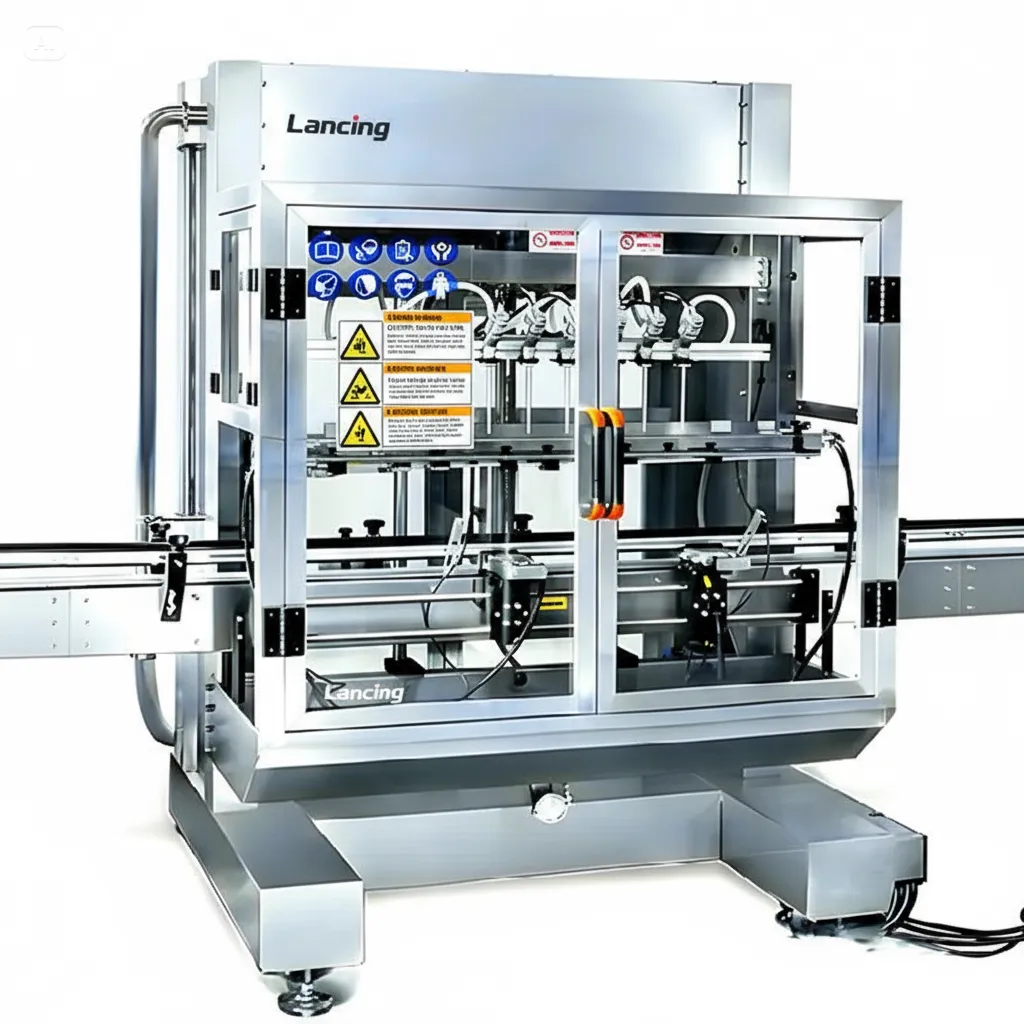
Automatic filling platform engineered for flammable solvents in zoned environments. Explosion‑protected electricals and pneumatic actuation reduce ignition risks and support compliance.
Key features
Ex‑rated enclosures and cabling for hazardous areas (spec per Zone/Group).
Air‑driven cylinders reduce ignition sources at the point of fill.
Static control provisions for solvent handling.
Bottom‑up fill helps manage foaming/volatility.
Compatible with piston, gear, or mass/magnetic pumps.
Pairs with cappers and labellers in protected cells.
Technical information
Performance varies by product, container and setup. Ask for a timed trial or specification review.
| Classification | Configured to site Zone (1/2) and Gas Group per assessment |
|---|---|
| Electricals | Ex‑rated panels, e‑stops, and operator devices |
| Actuation | Primarily pneumatic with interlocks |
| Static control | Grounding, bonding, and dissipative guides |
| Ventilation | Local exhaust/containment (site‑dependent) |
| Documentation | Risk assessment & conformity dossier |
| Dose ranges | From 50 ml to 5000 ml (pump‑dependent) |
| Heads | 1–6 heads (per throughput) |
| Conveyor height | Custom to line |
| Materials | SS frames; sealed components |
| Utilities | Air 0.4–0.6 MPa; 110/220 V 50–60 Hz |
| Options | Weigh cells, mass flow, nitrogen blanketing |
Applications
Acetone, ethanol blends, thinners*
Perfume bases and alcohol products*
Lab solvents & reagents*
What is included
Related products
Liquid filling machines
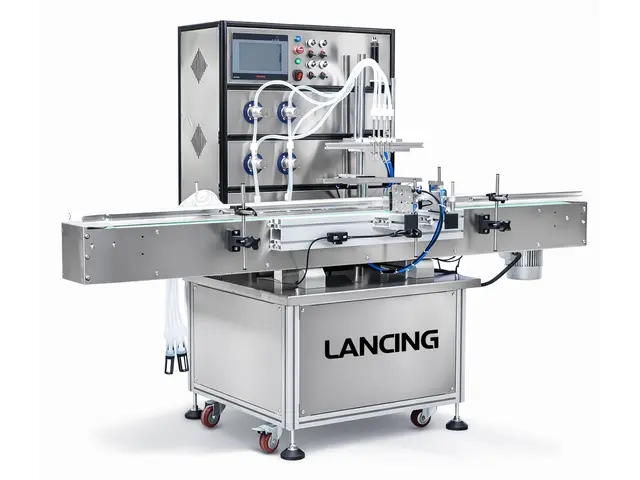
Liquid filling machines configured for free-flowing, foamy, corrosive, hygienic or high-value liquids in bottles, vials, jerrycans and…
View details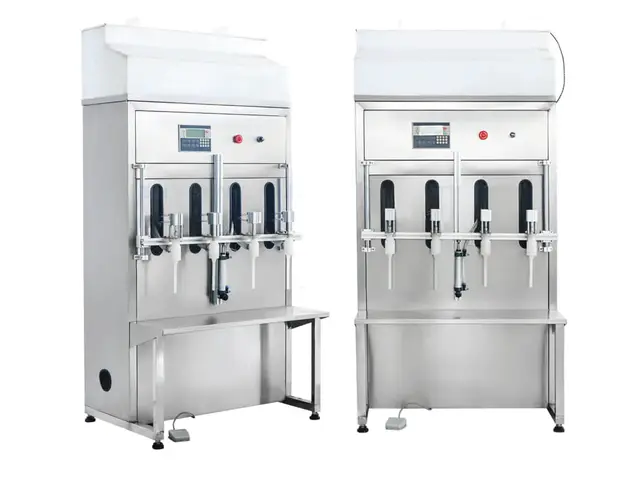
Automatic filling machines
Automatic gravity filler engineered for corrosive liquids like bleach, acids and fertilizers. Non‑metal wetted parts (PP/PTFE/PVC)…
View details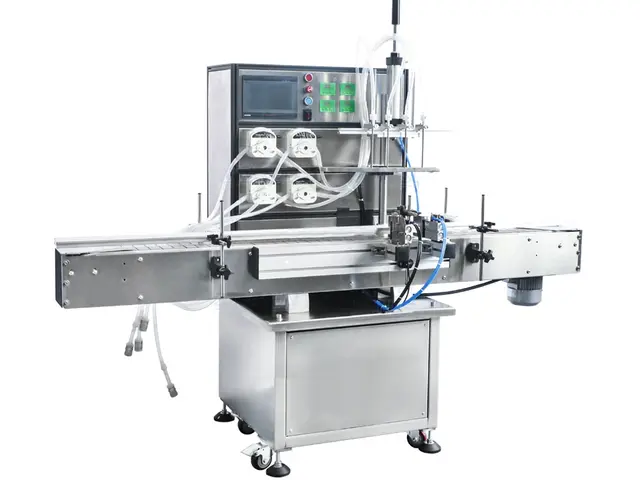
Automatic filling machines
Automatic 4‑head diaphragm‑pump filler for gels, shampoo and detergents. Large 40 L/min flow rate supports ≈30–45 bpm with four…
View detailsApplication and acceptance guidance
This product page describes a configurable automatic platform for flammable liquids and identifies project-dependent protection measures. The final design cannot be selected from a web specification alone. It requires the site operator’s hazardous-area classification, product safety data, process release points and the agreed boundary between filling equipment, extraction, product supply and downstream machinery.
Dose range, head count and metering technology are also application-dependent. Establish those only after the safe product path and site requirements are defined. A surrogate liquid may be used for some mechanical tests, but any difference from the production liquid must be recorded and addressed before final acceptance.
Provide zone and gas or vapour group information, temperature requirements and a drawing showing boundaries. Confirm whether normal filling, container venting, spill or cleaning can change those boundaries.
Review product vessel, pump, hoses, filling platform, conveyor, cap handling, controls and extraction. Allocate the design, installation and verification responsibility for each interface.
Agree drawings, equipment certificates where applicable, risk assessment inputs, inspection records, operating instructions and test evidence. Do not replace missing documents with generic marketing descriptions.
Specification and trial evidence
The project should not pass a hold point until the required first-party evidence has been supplied and reviewed.
| Selection point | What to define or test | Why it matters |
|---|---|---|
| Hazardous-area input | Approved classification and site standards received | Required before final equipment selection. |
| Materials input | Product and cleaning compatibility reviewed for the complete path | Required before product-contact design is frozen. |
| Layout input | Release points, extraction, containment and equipment boundaries agreed | Required before arrangement approval. |
| Controls input | Stop, interlock, earthing and interface responsibilities documented | Required before controls build and testing. |
| Trial input | Safe test medium or production product, packs and acceptance method agreed | Required before performance testing. |
| Site verification | Installation inspection and site responsibilities completed | Required before the customer releases production use. |
Buyer questions
No blanket conclusion should be drawn. The final equipment must be configured and assessed against the approved site classification and the location of each component.
The pump and metering principle must suit the liquid, dose, flow and hazardous-area requirements. Materials, static, seals and protection concept need project-specific review.
It can help control static potential where required, but the complete static risk depends on liquids, containers, hoses, flow and site procedures. Follow the risk assessment.
That depends on the substance, release, process, classification and site design. The customer’s competent project team should define the ventilation or containment requirement.
Use an agreed safe test medium and clearly state which properties it does or does not reproduce, or test the production product under an approved safe procedure. Record dose and control conditions.
Send the SDS, area classification, product and cleaning temperatures, pack and closure, fill range, output, product feed, extraction information and site standards.