
When gear pump filling is useful
Gear pumps can provide controlled dosing for compatible liquids and semi-viscous products. They are often reviewed for oils, lubricants, detergents and products that need steady flow.
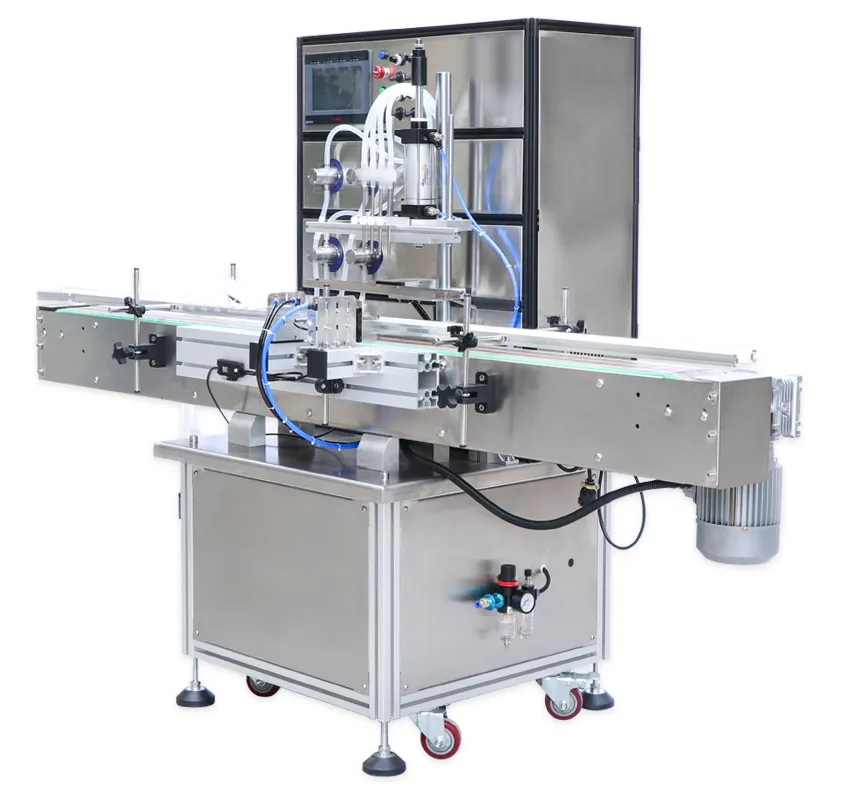
Gear pump filling machines
Gear pump filling machines use pump rotation to meter product flow. They can suit oils, gels, detergents and other compatible liquids where controlled flow and repeatable filling are required.
Specification guide
These notes are written for buyers comparing filling machinery options before requesting a quotation.
Gear pumps can provide controlled dosing for compatible liquids and semi-viscous products. They are often reviewed for oils, lubricants, detergents and products that need steady flow.
Gear pump filling can be supplied as a standalone semi-automatic machine or configured with conveyors, sensors and multiple heads for automatic production.
Product chemistry, viscosity, abrasiveness and clean-down process should be reviewed before selecting a gear pump filler.
Key considerations
Pump speed and fill time can be used to control dose.
Often considered for oils, gels and household liquids.
Automatic versions can use multiple filling nozzles.
Bottles, cans and larger packs can be reviewed against the product.
Relevant machines
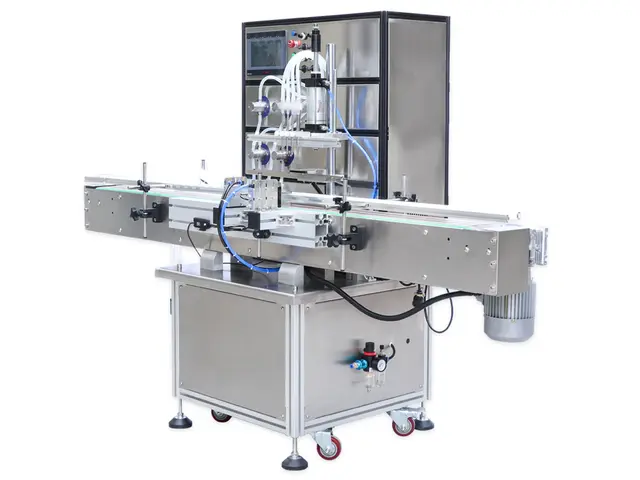
Automatic filling machines
Equipped with a gear pump, this liquid filling machine can work automatically. The machine can fill about 30 bottles/min (at 5L). Each filling nozzle of this machine can be cont…
View details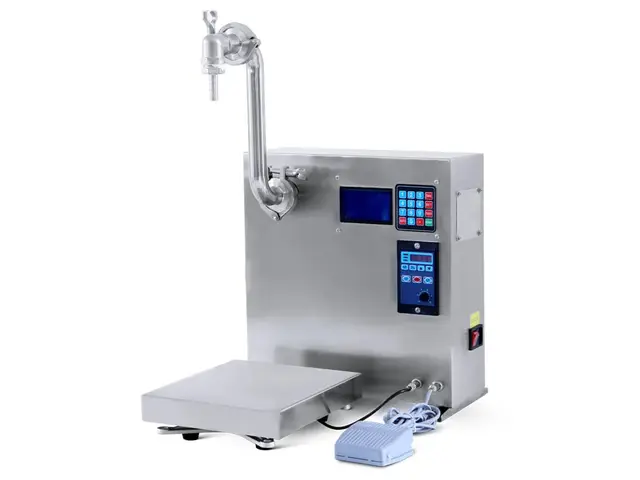
Semi-automatic filling machines
Bench‑friendly gear‑pump filler with built‑in weighing. High flow (up to 36 L/min) handles oils and thicker liquids. Set a target weight for simple, accurate fills.
View details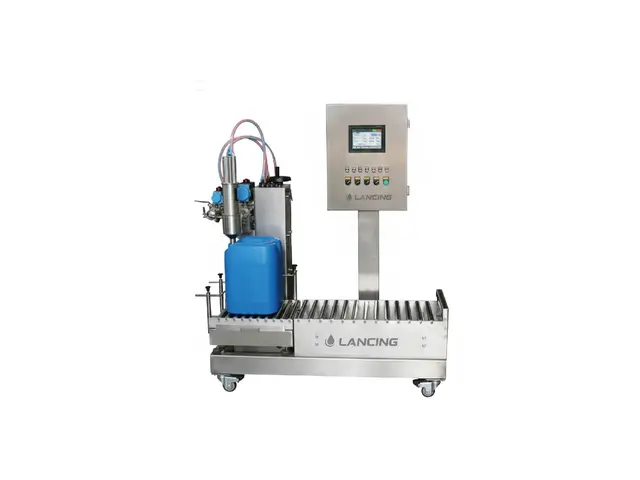
Semi-automatic filling machines
Weighing-based large-volume filler for 5–30 L containers. Diving nozzles handle foamy liquids cleanly while the gear pump keeps supply steady; the conveyor transfers filled buckets…
View details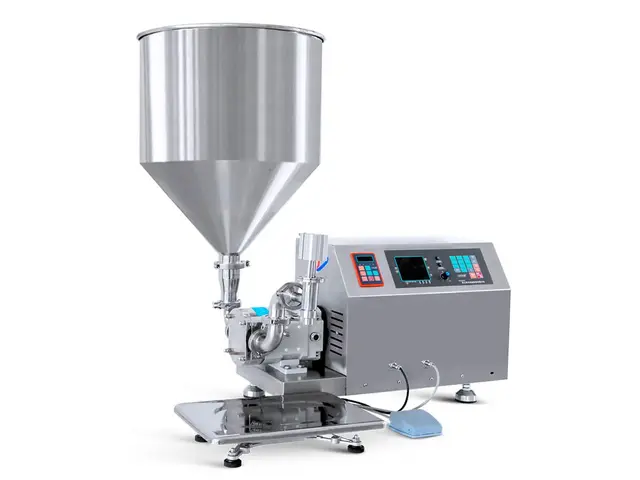
Specialist filling machines
The Roto Lube pump filling machine has advantage of high accuracy when filling thick liquid or paste like jam,noodle pulp,meat stuffing,tomato paste etc.It is widely used in food,c…
View details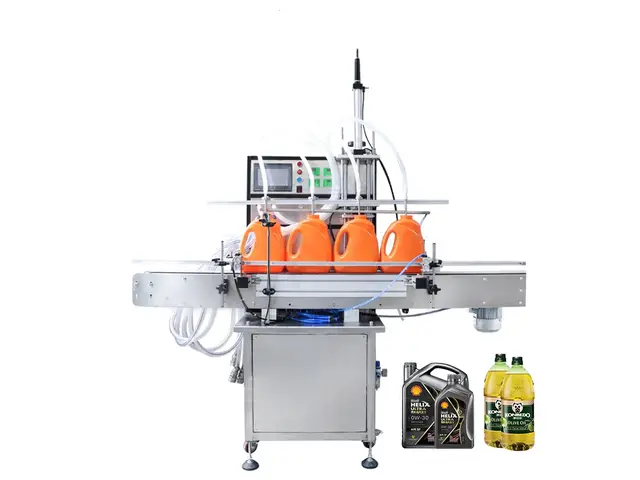
Automatic filling machines
Automatic 4‑head diaphragm‑pump filler for gels, shampoo and detergents. Large 40 L/min flow rate supports ≈30–45 bpm with four independently controlled nozzles.
View detailsRelated guides
FAQ
Oils, detergents, gels and compatible semi-viscous liquids are common candidates.
Yes. Gear pump filling can be integrated into automatic lines with conveyors and sensors.
Abrasive or particle-heavy products need careful review because they may affect pump wear and accuracy.
Speak to Lancing
Tell us the liquid, container, fill range and target output. Lancing will recommend a practical semi-automatic, compact or fully automatic option.
Controlled pump dosing
A gear pump moves a controlled quantity of liquid through meshing gears. It can provide a compact and responsive dosing route for many oils, detergents and compatible free-flowing to moderately viscous products. Product properties still matter: poor lubrication, abrasive solids, crystallisation, incompatible seals or running dry can shorten pump life or make the dose unstable.
The pump should be considered with its inlet and outlet circuit. Hose diameter, suction lift, source level, filter, valves, nozzle restriction and residual pressure can change priming, flow and shut-off. A good trial includes low-product conditions, restart after a pause and the nozzle behaviour at the intended production rate.
Provide a flooded inlet where the design requires it, avoid unnecessary restrictions and define minimum source level. Air leaks, undersized hoses or a blocked filter can cause inconsistent flow even when the programmed pump movement is unchanged.
Confirm chemical compatibility, lubricity, solids, temperature and whether the liquid can set or crystallise. Review gears, housing, shaft seals, hoses and nozzle together; compatibility of one visible part is not enough.
Pump deceleration, reversal or suck-back, a positive shut-off nozzle and controlled hose pressure may be used to reduce drip or stringing. The optimum profile should be proven with the real product and fill height.
Specification and trial evidence
These data points help separate a suitable pump application from one better served by another technology.
| Selection point | What to define or test | Why it matters |
|---|---|---|
| Viscosity range | Minimum and maximum at actual filling temperatures | Determines torque, speed range, suction behaviour and dose profile. |
| Lubrication and solids | Product lubricity, particle size, abrasiveness and crystallisation | Protects gears, clearances and seals from an unsuitable product. |
| Suction circuit | Source, hose diameter and length, lift, valves, filter and minimum level | Defines stable priming and prevents cavitation or air ingestion. |
| Discharge circuit | Hose, nozzle, valve, height and any back pressure | Affects flow, residual pressure and end-of-fill behaviour. |
| Dry-run control | Low-level detection, prime confirmation and operator response | Reduces the risk of running without product where the pump is vulnerable. |
| Cleaning and storage | Drain, flush, dismantling, compatible cleaning agent and idle condition | Prevents residues damaging or locking the pump between batches. |
Buyer questions
Many compatible oils, detergents and free-flowing to moderately viscous liquids can be considered. The decisive factors are viscosity range, lubrication, solids, chemical compatibility, dose and required flow.
Some gear pumps rely on the product for lubrication and cooling. Low-level detection, priming checks and an appropriate operating procedure should be defined for the selected pump.
It may be possible, but foam generation depends on product handling, inlet air, pump speed and nozzle delivery. A controlled profile and bottom-up nozzle should be trialled where appropriate.
The control may use pump speed, time or measured rotation, depending on the machine. The final calibration must still be verified using the actual product and agreed measurement method.
Residual hose pressure, pump deceleration, product stringing, nozzle geometry and valve response can contribute. Trial reversal, shut-off and nozzle options rather than relying on timing alone.
The method depends on product and machine design. Define drainability, flushing, disassembly, cleaning-agent compatibility, inspection and how the pump is left between production runs.
Buyer questions
A gear pump relies on a stable inlet and a product that is suitable for the proposed pump and wetted path.
A gear-pump filler commonly controls pump rotation, speed and run profile so a repeatable volume is displaced through the product path. The practical dose depends on the selected pump, prime, inlet condition, product behaviour and shut-off. The proposed configuration and calibration method should be confirmed for the actual liquid rather than inferred from the generic machine category.
Product level, source position and feed pressure change the conditions at the pump inlet. If those conditions vary, the pump may refill differently, draw air or experience slip depending on the liquid and configuration. Keep the source condition controlled during trials and define the minimum level and replenishment method for production.
Protection can include controlled prime procedures, minimum product-level management, sensors or interlocks and an operating sequence that prevents demand before the inlet is ready. The suitable method depends on the pump and product. The aim is to avoid unlubricated operation, overheating, wear and an unstable dose rather than relying on an operator to notice after fills change.
Check component orientation, clearances, seals, fasteners, free movement, hose connections and the approved cleaning state. Prime from a known source condition, inspect for leaks or air entry and verify sequential fills before returning to production. The loss-of-prime guide covers restart symptoms.
Gear-pump application checks
Gear-pump filling can provide controlled positive-displacement dosing, but the liquid, suction arrangement, pressure and cleaning method must suit the selected pump and fluid path.
A gear pump uses close-running elements and positive displacement, so the complete application should be assessed for shear, aeration and damage to particles or delicate structures. Pump speed, clearances, suction conditions and downstream restriction all matter. Representative product trials should compare the product before and after the full path under realistic production conditions.
A gear-pump filler can lose prime when the suction path admits air, the source level is too low, the product is too viscous for the available inlet conditions, a valve leaks, or the pump and pipework are not filled after cleaning. The cause should be diagnosed systematically rather than compensated for by changing fill settings.
The spares plan should be based on the exact pump, seals, valves, couplings, nozzle and sensors supplied. Product chemistry, abrasiveness, temperature and cleaning influence wear. Parts should be identified by verified machine documentation because visually similar seals or pump components may have different materials, tolerances or product-contact suitability.
Downstream restriction affects pressure, flow response and nozzle shut-off. Long small-bore hoses, restrictive valves or unsuitable nozzles can increase back-pressure, delay cut-off and contribute to dripping. The filler should be tested with the intended hose lengths, nozzle and product temperature so the metering profile and anti-drip method are set for the real system.