
Weigh-by-fill accuracy
Integrated scale controls each fill by weight for consistent results (±0.5% typical).
Semi-automatic filling machines
Weighing-based large-volume filler for 5–30 L containers. Diving nozzles handle foamy liquids cleanly while the gear pump keeps supply steady; the conveyor transfers filled buckets downstream.
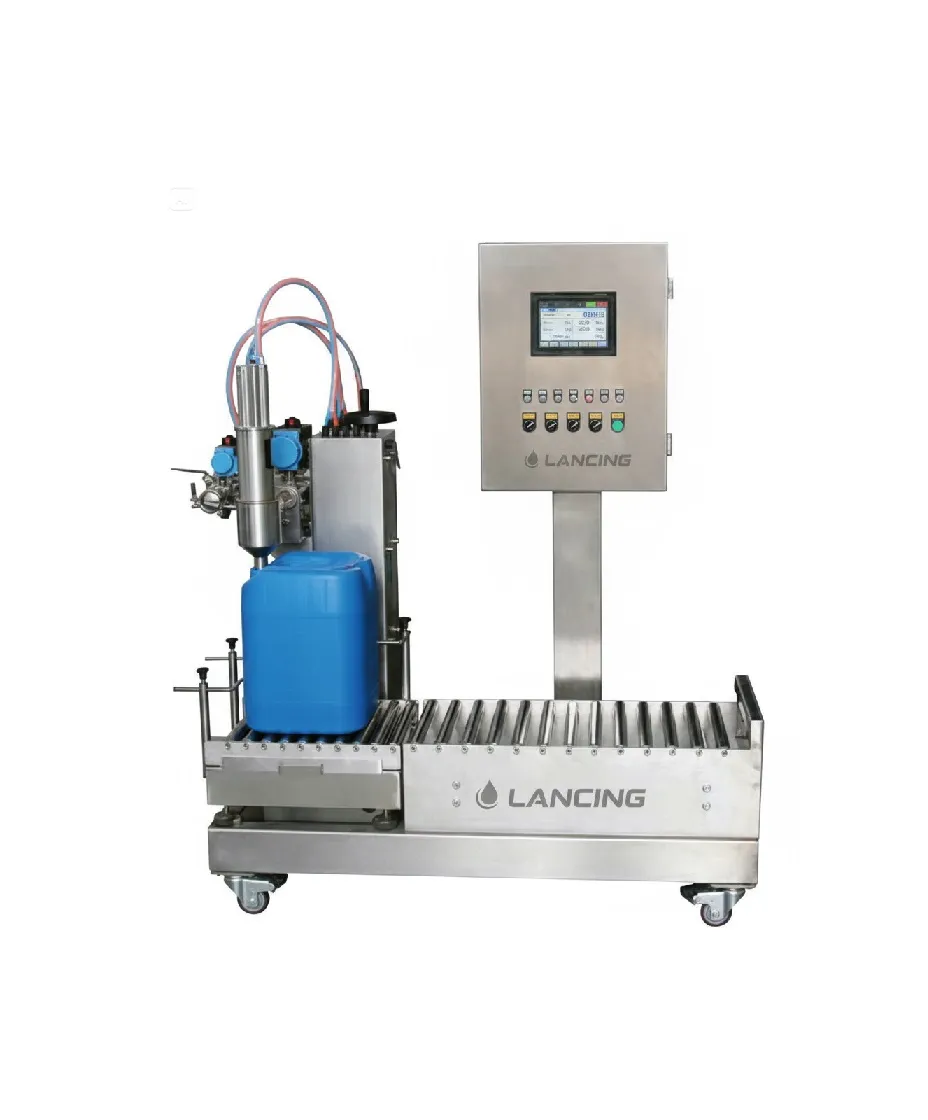
Key features
Integrated scale controls each fill by weight for consistent results (±0.5% typical).
Nozzles rise with the liquid surface to minimise foaming and splashing.
Maintains constant supply to the heads for stable throughput.
Ideal for detergents, oils, antifreeze, cleaning agents.
Twin diving heads and ~4.1 m chain conveyor for efficient handling.
Simple, multilingual HMI with parameter presets.
Technical information
Performance varies by product, container and setup. Ask for a timed trial or specification review.
| Model | LUGTW2S platform |
|---|---|
| Fill range | 5–30 L |
| Speed | ≈100–120 bottles/hour (volume‑dependent) |
| Accuracy | ±0.5% |
| Nozzles | 2 × diving heads |
| Feeding pump | Gear pump |
| Voltage | 380 V, 50 Hz |
| Air pressure | 0.5–0.7 MPa |
| Max weighing | 50 kg |
| Conveyor length | ≈4100 × 610 × 650 mm |
| Machine size | ≈1160 × 940 × 1800 mm |
| Package size | ≈1110 × 1110 × 1730 mm |
Applications
Laundry detergent, disinfectants, cleaners.
Antifreeze, coolants, oils.
Bulk chemicals and process liquids.
What is included
Related products
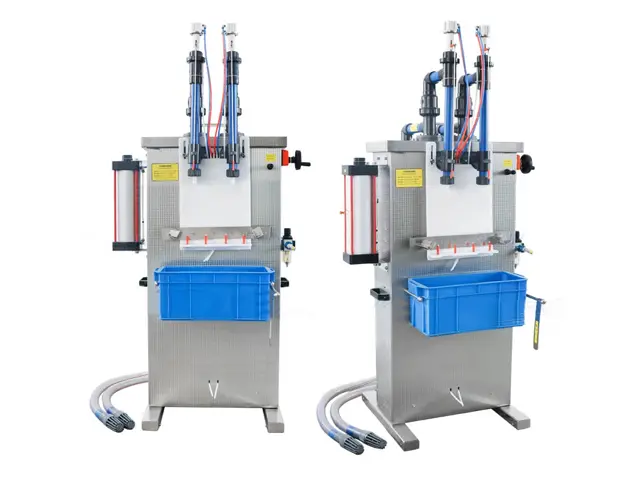
Semi-automatic filling machines
Fully pneumatic, double‑head filler engineered for corrosive liquids like toilet cleaner and acids. All wetted parts are plastic to…
View details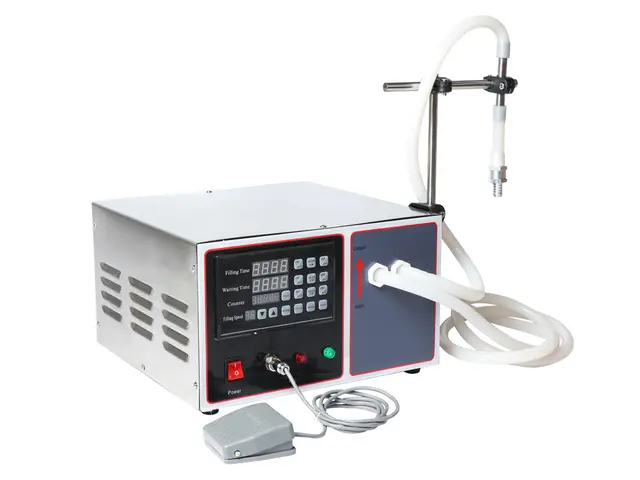
Semi-automatic filling machines
Bench‑friendly diaphragm‑pump filler with built‑in weighing to improve accuracy. Ideal for cosmetics, shampoos and foamy or solvent‑based…
View details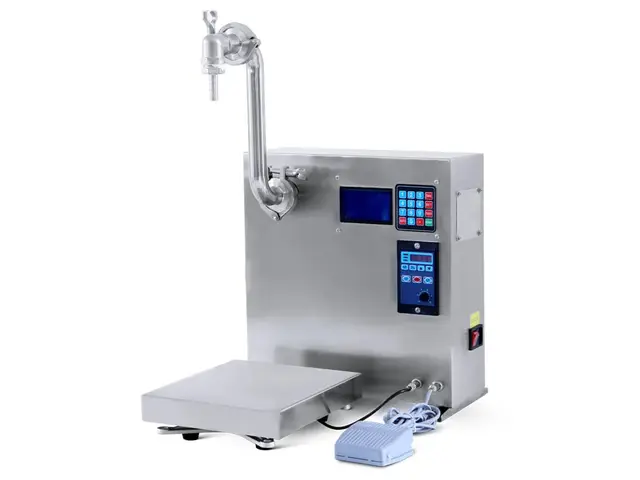
Semi-automatic filling machines
Bench‑friendly gear‑pump filler with built‑in weighing. High flow (up to 36 L/min) handles oils and thicker liquids. Set a target weight…
View detailsApplication and acceptance guidance
This machine is configured for larger containers using a weighing platform, two diving heads and a gear-pump feed. The existing page states the fill range and reference performance, but production results depend on container tare, product flow, cut-off compensation and the operator or conveyor process used to remove a heavy full pack.
The two heads should be checked for equal flow and shut-off, while the scale should be isolated from hose forces and conveyor contact during weighing. A representative trial includes the intended container at the maximum full weight and the actual product source, not only a small water test.
Define how each bucket is centred and tared. Check that rollers, guides and the nozzle assembly do not create side loads. Verify scale zero and result stability before starting a batch.
Set the high-flow stage, changeover point, final flow and cut-off compensation with the actual product. Test source-level variation and observe product still in flight after the command to stop.
Set nozzle depth and rise profile to reduce foam or splash without contacting the pack. Confirm the full container can be withdrawn, closed and transferred without disturbing the scale or spilling product.
Specification and trial evidence
Use the installed feed and conveyor arrangement wherever possible.
| Selection point | What to define or test | Why it matters |
|---|---|---|
| Scale verification | Check zero, test load procedure and stable container support | Establishes the measurement system. |
| Head balance | Compare fills and flow behaviour from both nozzles | Prevents one head carrying a different bias or cut-off delay. |
| Range test | Run minimum, normal and maximum required containers | Confirms staged flow and full-pack handling. |
| Foam and splash | Observe nozzle depth, rise, surface behaviour and pack exterior | Protects clean transfer and final quantity. |
| Source change | Test normal high and low product-source conditions | Shows whether flow and in-flight compensation remain stable. |
| Complete cycle | Include positioning, filling, closure and removal in output measurement | Produces a realistic containers-per-hour result. |
Buyer questions
They can place product closer to or beneath the liquid surface, helping control foam and splash. Their position and rising profile need to be set for the actual bucket and fill level.
Test the actual required minimum and maximum containers and targets. Check scale, nozzle height, flow stages, full-pack handling and any guide changes.
Potentially, subject to product viscosity, outlet, hose route, head pressure and low-level behaviour. Use the planned arrangement in the trial.
Product in flight, cut-off delay, unstable flow, vibration or forces on the scale can contribute. Tune bulk and fine stages under stable measurement conditions.
Count accepted closed containers over an agreed period and record placement, fill, removal, product replenishment and stops. The fill timer alone is not the hourly output.
The mass and handling of the full pack. Plan rollers, conveyor or lifting assistance and the closure task so operators do not have to make awkward manual movements.
Technical guidance
Connect weight control, container presentation and product supply.
Define tare, net quantity, scale checks and records.
Read guideReview pail or bucket placement, stability and operator access.
Read guideConfirm tank/IBC connection, pressure and refill conditions.
Read guideAssess manual handling, spills, stored energy and product hazards.
Read guide