
Up to 36 L/min flow
Fast fills for medium–large containers.
Semi-automatic filling machines
Bench‑friendly gear‑pump filler with built‑in weighing. High flow (up to 36 L/min) handles oils and thicker liquids. Set a target weight for simple, accurate fills.
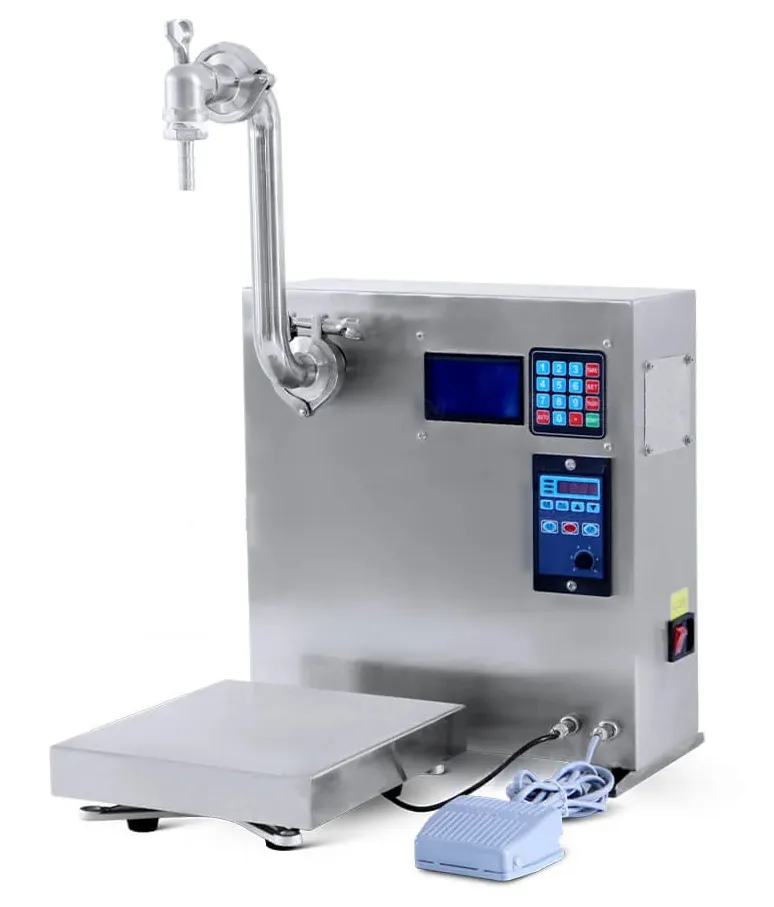
Key features
Fast fills for medium–large containers.
Set a target weight; 50 g–50 kg range.
≈1–5 g typical, product‑dependent.
Match different bottle sizes.
Clear working data and easy adjustment.
≈200 W at 110/220 V.
Technical information
Performance varies by product, container and setup. Ask for a timed trial or specification review.
| Model | LUGPW1 |
|---|---|
| Pump type | Gear pump |
| Max flow rate | ≈36 L/min (water) |
| Weighing range | ≈50 g – 50 kg |
| Filling accuracy | ≈1–5 g |
| Nozzle | Height adjustable |
| Power supply | AC 110/220 V, 50–60 Hz |
| Rated power | ≈200 W |
| Package size | ≈330 × 220 × 360 mm |
| Package weight | ≈16 kg |
| Controls | Digital display; weigh device |
| Modes | Manual/auto trigger |
Applications
Cooking oil, engine oil.
Grease, syrups (flow‑permitting).
Mineral water and similar.
What is included
Related products
Semi-automatic filling machines
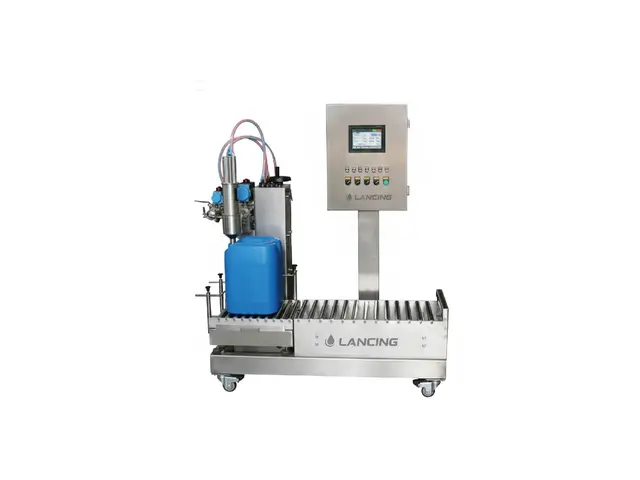
Weighing-based large-volume filler for 5–30 L containers. Diving nozzles handle foamy liquids cleanly while the gear pump keeps supply…
View details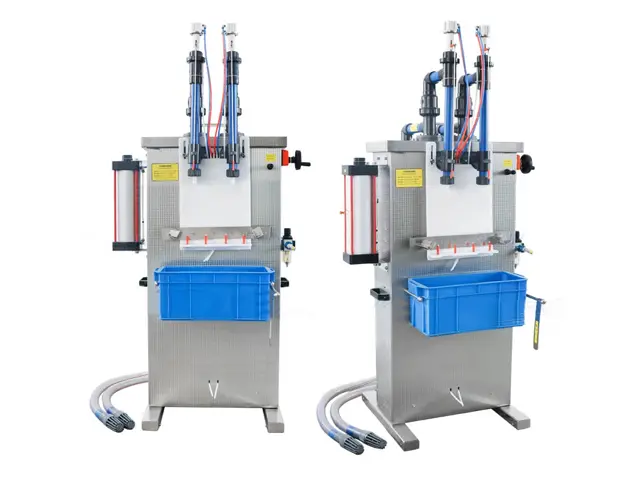
Semi-automatic filling machines
Fully pneumatic, double‑head filler engineered for corrosive liquids like toilet cleaner and acids. All wetted parts are plastic to…
View details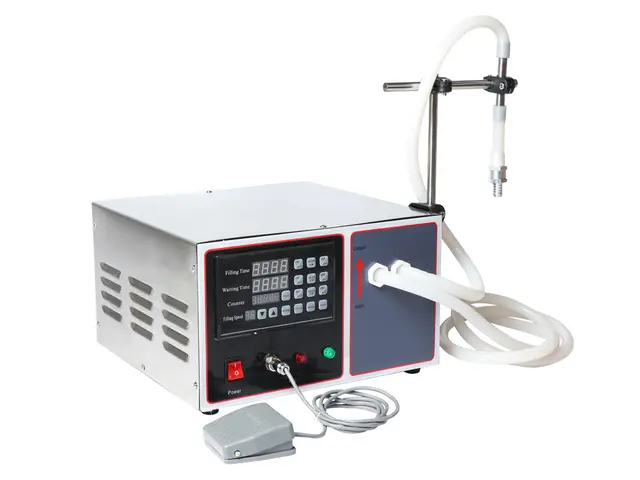
Semi-automatic filling machines
Bench‑friendly diaphragm‑pump filler with built‑in weighing to improve accuracy. Ideal for cosmetics, shampoos and foamy or solvent‑based…
View detailsApplication and acceptance guidance
This semi-automatic machine combines a gear pump with a weighing device and is presented for a broad weight range. The reference maximum flow is based on water, so actual flow and stopping behaviour must be established with the intended liquid. Oils and compatible thicker liquids may suit the pump, subject to viscosity, lubrication, solids, seals and the risk of dry running.
Because the target is controlled by weight, the scale and container presentation are part of the measurement system. The work surface must be stable and free from side loads or vibration. Define how the empty container is tared, how the operator positions it and when the filled result is accepted.
Confirm product viscosity at filling temperature, lubrication, particles, chemistry and cleaning. Use the intended source and hose arrangement so priming and flow reflect production.
Check scale zero, container tare method, platform contact and the resolution needed at the smallest target. Keep hoses or the nozzle from applying a force to the container during measurement.
Position empty packs, filled packs, closures and sample checks around the machine. Include full-container weight, nozzle height changes and product replenishment in the timed cycle.
Specification and trial evidence
Reference values on this page should be confirmed under product-specific conditions.
| Selection point | What to define or test | Why it matters |
|---|---|---|
| Prime and low level | Prime the pump and test near the minimum approved source level | Reveals air entry and dry-run risk. |
| Tare method | Use the planned individual or standard tare procedure | Separates container weight from fill result. |
| Target range | Test the smallest, normal and largest production targets | Checks scale resolution, flow stages and cut-off. |
| Nozzle shut-off | Observe immediate and delayed drip after normal and interrupted fills | Protects pack cleanliness and measured mass. |
| Operator cycle | Time placement, filling, removal, closure and checks | Produces a realistic batch-output figure. |
| Clean-down | Drain or flush the pump and verify the next approved setup | Confirms practicality for the production mix. |
Buyer questions
It allows the controller to stop at a target mass, subject to correct tare, stable support and product in flight. The test method should match the production procedure.
The existing specification gives a broad range, but scale resolution, pump control and container handling should be checked at the smallest and largest intended targets.
Products with abrasive solids, poor lubrication, incompatible chemistry or a tendency to crystallise may require another pump or technology. Review a representative sample.
The controller can use staged flow or compensation, while nozzle height, hose pressure and product still travelling after cut-off also matter. Tune with the actual product.
Container supply, positioning, fill time, closure, sample checks, product refill and moving a full pack all contribute. Time the complete cycle.
Confirm correct connections, prime, scale zero, target recipe, absence of leaks and an approved sample before production resumes.