
Product behaviour
Larger container filling needs stable handling, splash control, accurate stop points and safe operator access. Weight filling is often useful where the final pack weight matters or product density varies.
Bucket and pail fillers
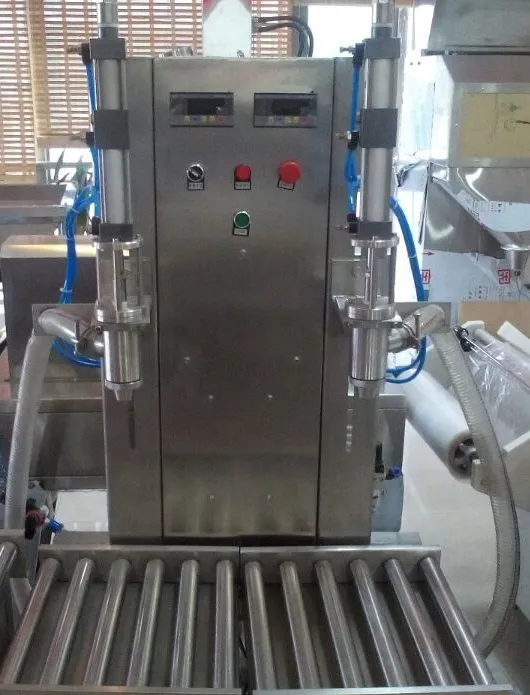
Bucket filling machines are used where product is supplied in larger packs such as pails, tins, cans and industrial containers. Lancing can specify weight, volumetric or pump-fed systems around the liquid and container range.
Specification guide
Use these notes to narrow the specification before requesting a quotation.
Larger container filling needs stable handling, splash control, accurate stop points and safe operator access. Weight filling is often useful where the final pack weight matters or product density varies.
Confirm bottle, jar, vial, bucket or jerrycan dimensions, neck opening, fill volume range and whether the same machine must cover multiple formats.
Daily volume and containers per minute decide whether a compact, semi-automatic or fully automatic configuration is the sensible starting point.
Product-contact parts, hose sets, hopper design and tool-free changeover can make a major difference when products or container sizes change regularly.
Applications
Lancing can review the product, container and target output to recommend a practical machine configuration rather than a generic one-size-fits-all filler.
Relevant machines
Semi-automatic filling machines
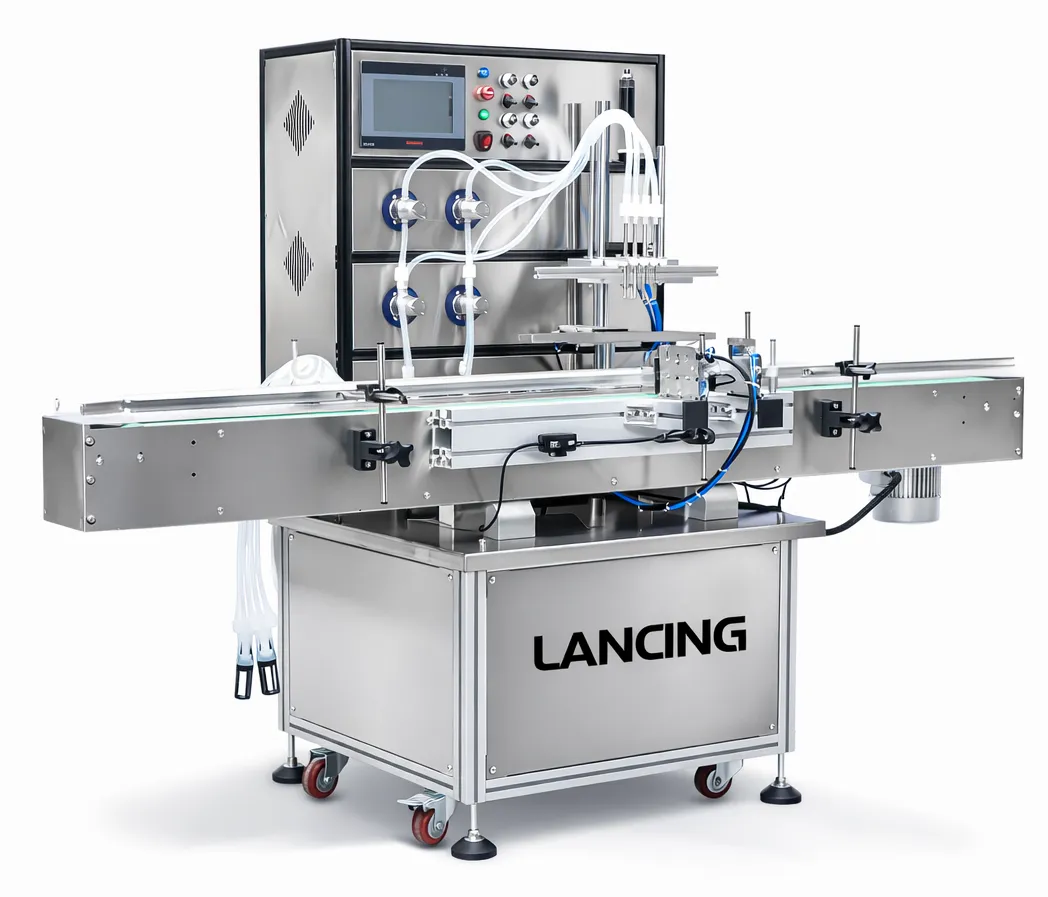
Weighing-based large-volume filler for 5–30 L containers. Diving nozzles handle foamy liquids cleanly while the gear pump keeps supply steady; the conveyor transfers filled buckets downstream.
View details
Specialist filling machines
The Roto Lube pump filling machine has advantage of high accuracy when filling thick liquid or paste like jam,noodle pulp,meat stuffing,tomato paste etc.It is widely used in food,cosmetics,daily chemical industries
View details
Semi-automatic filling machines
The semi-automatic system offers separate machines each requiring manual product placement but still affording a very significant improvement in production rates compared to manual filling, capping and labelling. Lancing…
View details
Liquid filling machines
Liquid filling machines configured for free-flowing, foamy, corrosive, hygienic or high-value liquids in bottles, vials, jerrycans and buckets.
View detailsFAQ
The main details are product name, viscosity, fill volume, container dimensions, closure type, required output, cleaning requirements and whether the liquid is foamy, corrosive, flammable, hot-filled or hygienic.
Yes. Lancing can discuss semi-automatic, compact and fully automatic configurations depending on output target, operator involvement and future production plans.
The best method depends on product behaviour. Thin liquids, viscous products, foamy liquids, corrosive chemicals and high-value small fills may each need a different filling principle.
Speak to Lancing
Send the product, container, fill range and target output. Lancing will recommend a suitable semi-automatic, compact or fully automatic option.
Large-container filling
Filling buckets, pails and larger containers changes the production problem. The dose is larger, the finished pack is heavier and small flow or shut-off errors can create significant overfill, splash or clean-up. Weight-based filling is often considered because the pack sits on a scale, but tare variation, platform stability, vibration and product in flight still have to be managed.
A staged fill profile can use faster bulk flow followed by a slower finishing phase. The correct changeover point depends on product flow, nozzle height, cut-off delay and the amount that continues travelling after the valve or pump is commanded to stop. This should be tuned with the actual hose, nozzle and product supply.
Define whether each empty container is tared individually or an expected tare is used. Check pallet, platform, conveyor or roller interference, vibration and how a container is centred without side loads affecting the measurement.
High initial flow can reduce cycle time, while controlled final flow reduces overshoot and splash. The product feed must remain stable enough that the cut-off and in-flight compensation are repeatable across the batch.
Plan how the heavy filled container leaves the station, how spills are contained and where caps, bungs or lids are applied. Manual lifting and awkward withdrawal can become the true constraint even when the fill is fast.
Specification and trial evidence
Use realistic containers and the intended product supply so scale and flow behaviour reflect production.
| Selection point | What to define or test | Why it matters |
|---|---|---|
| Container | Nominal size, empty weight variation, rigidity, opening and handling method | Defines tare strategy, nozzle access and platform arrangement. |
| Target mass | Net or gross target, tolerance and legal or internal measurement basis | Sets how the controller and acceptance calculation are configured. |
| Flow stages | Bulk rate, fine rate, changeover point and cut-off compensation | Balances output against overshoot and splash. |
| Nozzle movement | Fixed, diving or rising arrangement and distance from product surface | Controls aeration, foam and container cleanliness. |
| Product feed | Pump, gravity head, IBC, vessel level and hose route | Maintains repeatable flow as the source empties or is replenished. |
| Pack removal | Roller, conveyor, pallet, manual slide or lifting assistance | Ensures the full container can be closed and moved safely. |
Buyer questions
Weight measurement can suit larger packs and products sold or controlled by mass. It directly measures the pack on a scale, subject to tare, vibration, product in flight and the agreed test method.
It is product that has left the control valve or nozzle but has not yet reached the container when cut-off occurs. The controller may compensate, but the amount depends on flow, height, hose and product behaviour.
It can be a practical source, subject to outlet arrangement, head pressure, hose route, product viscosity and how flow changes as the IBC empties. A pump may be needed for some applications.
Use appropriate nozzle diameter, lower nozzle position, diving movement, controlled acceleration and staged flow. Trial the actual opening and fill height.
Review platform or guide adjustment, nozzle height, tare, target recipe, hose or nozzle size and full-pack transfer. Verify each format with the intended container.
Record net fill results, tare method, sample size, scale status, product condition, flow profile, spills, container handling and good output over an agreed period.