
Product behaviour
Essential oil products are often filled in small bottles where a small dosing error is highly visible. Tube compatibility, changeover time, bottle presentation and anti-drip nozzle design are important details.
Essential oil fillers
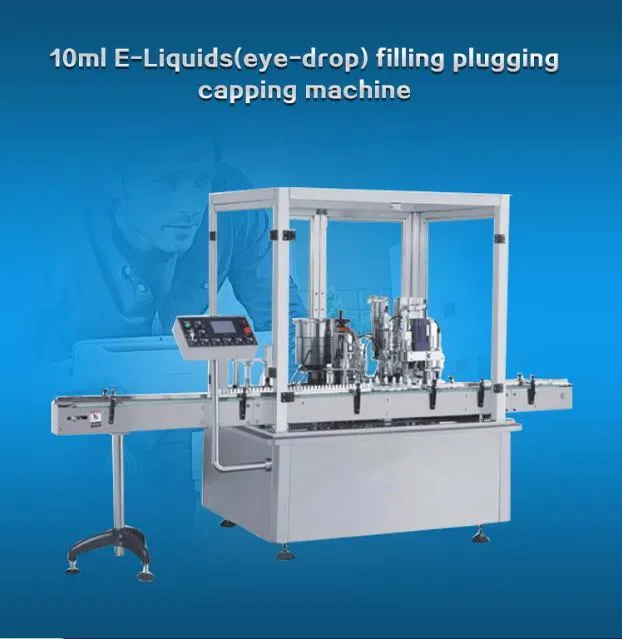
Essential oil filling machinery needs accuracy, clean product handling and careful control of small fill volumes. Lancing can supply compact and peristaltic systems for small bottles, droppers and high-value liquids.
Specification guide
Use these notes to narrow the specification before requesting a quotation.
Essential oil products are often filled in small bottles where a small dosing error is highly visible. Tube compatibility, changeover time, bottle presentation and anti-drip nozzle design are important details.
Confirm bottle, jar, vial, bucket or jerrycan dimensions, neck opening, fill volume range and whether the same machine must cover multiple formats.
Daily volume and containers per minute decide whether a compact, semi-automatic or fully automatic configuration is the sensible starting point.
Product-contact parts, hose sets, hopper design and tool-free changeover can make a major difference when products or container sizes change regularly.
Applications
Lancing can review the product, container and target output to recommend a practical machine configuration rather than a generic one-size-fits-all filler.
Relevant machines
Automatic filling machines
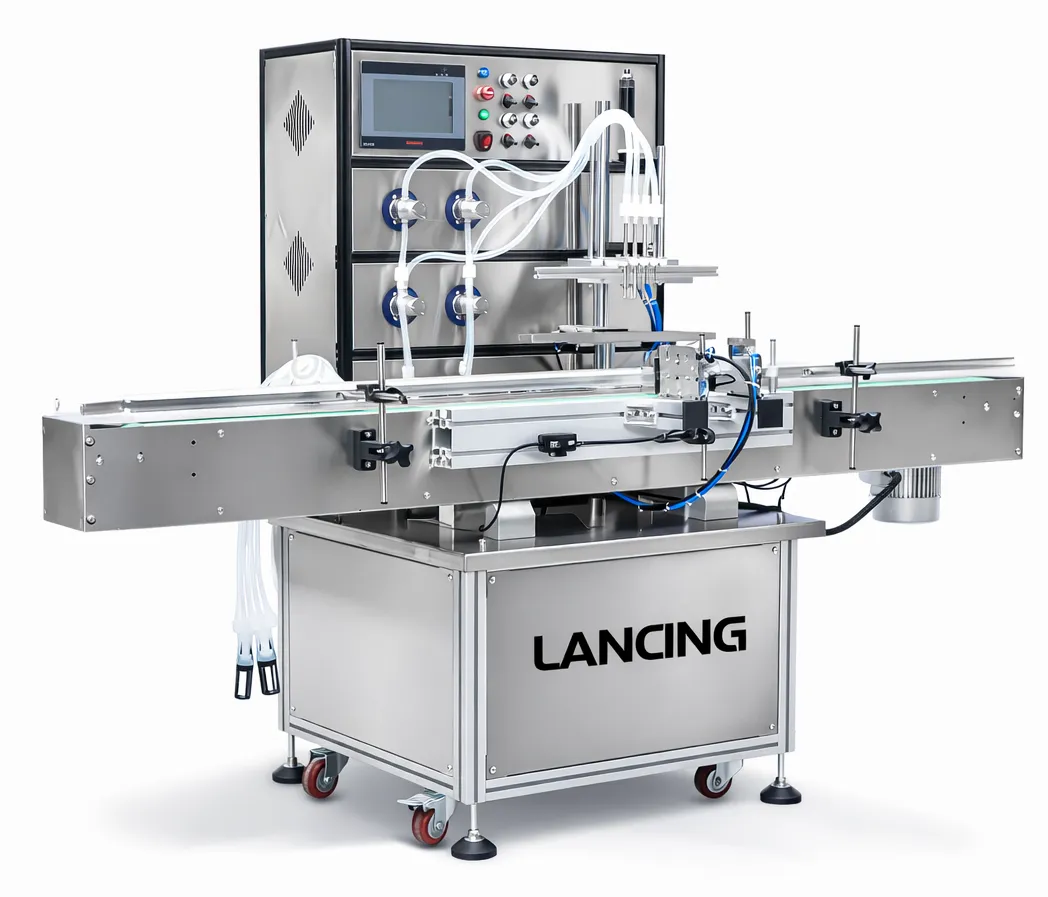
Servo‑controlled peristaltic filler with touch HMI. Dosing volume is set directly on the screen—no need to time the fill. Four peristaltic channels keep product inside disposable tubing for rapid changeovers.
View details
Compact filling machines
Desktop automatic peristaltic filler with 4 nozzles. Each head has an independent pump (≈60 W) delivering up to ≈4000 ml/min; ≈30–50 bpm depending on bottle and liquid.
View details
Semi-automatic filling machines
Double‑head semi‑automatic peristaltic filler for large bottles and jugs. High flow (≈12 L/min × 2) with tubing‑only contact makes quick, hygienic changeovers.
View details
Liquid filling machines
Liquid filling machines configured for free-flowing, foamy, corrosive, hygienic or high-value liquids in bottles, vials, jerrycans and buckets.
View detailsFAQ
The main details are product name, viscosity, fill volume, container dimensions, closure type, required output, cleaning requirements and whether the liquid is foamy, corrosive, flammable, hot-filled or hygienic.
Yes. Lancing can discuss semi-automatic, compact and fully automatic configurations depending on output target, operator involvement and future production plans.
The best method depends on product behaviour. Thin liquids, viscous products, foamy liquids, corrosive chemicals and high-value small fills may each need a different filling principle.
Speak to Lancing
Send the product, container, fill range and target output. Lancing will recommend a suitable semi-automatic, compact or fully automatic option.
An essential-oil filler should be selected using the formulation that will be sold. A neat oil, a carrier-oil blend and an alcohol-containing fragrance may require different compatibility and handling decisions even when they use the same bottle size. Send the exact product details and available safety data, and identify the expected range of oils rather than assuming one successful sample represents them all.
Where peristaltic filling is being considered, ask how the proposed tubing will be assessed for contact with the formulation. The liquid also encounters connectors, pickup parts and the dispensing nozzle, so a tubing-only compatibility answer may leave gaps. A representative trial should include the usual contact time and the product-change routine, with the method for approving clean product contact agreed in advance.
Supply the bottle with its dropper, plug or reducer and cap. Confirm filling quantity separately from the space needed for those components when assembled, and inspect the neck after filling. High-value short batches also justify measuring liquid used in priming and left in the product path at the end. These details help compare practical batch yield and complete pack handling, rather than choosing only by a pump’s maximum flow.
Do not assume it can. Review the actual formulations, contact conditions and proposed tube with the supplier, then confirm the relevant product range.
Yes. The plug, reducer or dropper and cap can affect available space, neck cleanliness and the filling-to-closing sequence.
Compare peristaltic filling arrangements Plan small-bottle presentation