
Product behaviour
Viscosity, foam, particles, temperature and chemical compatibility.
Pricing and quote guides
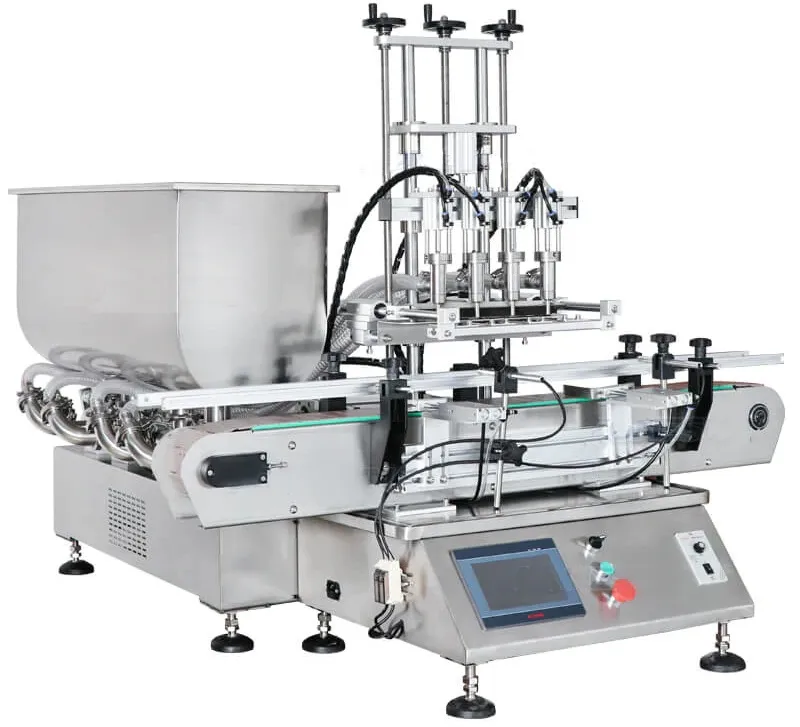
Startups often need a machine that can fill several products or container sizes without committing to a full automatic line. Semi-automatic and compact systems can provide repeatability while keeping the process flexible.
Buyer intent guide
The right filling machinery recommendation comes from the product, container and output target together. Lancing can compare semi-automatic, compact and fully automatic options once those details are clear.
Viscosity, foam, particles, temperature and chemical compatibility.
Bottle, jar, pail or jerrycan size, neck opening, stability and closure.
Fill volume or weight, accuracy tolerance and required bottles or packs per minute.
Manual loading, semi-automatic operation, compact automation or full inline production.
Specification notes
These points help make an enquiry more accurate and reduce the risk of selecting the wrong filling principle.
The same bottle filling machine can perform very differently when the liquid changes. A water-thin cleaner, a foaming detergent, a viscous sauce, a fragrance oil and a corrosive chemical each create different challenges. Product behaviour drives pump selection, nozzle design, materials and speed.
For a strong recommendation, include the product type, approximate viscosity, whether it foams or strings, whether it contains particles and whether it needs heating, mixing or special materials.
Filling speed should be balanced with capping, labelling, operator loading and packing. A fast filler does not improve the line if bottles cannot be presented, capped or labelled at the same rate.
For growing production, Lancing can discuss a sensible route from semi-automatic equipment to compact automation or a fully automatic filling line.
Relevant machinery
These product pages are useful starting points when discussing filling machine for startups.
Relevant Lancing machinery to discuss when specifying filling machine for startups projects.
View productRelevant Lancing machinery to discuss when specifying filling machine for startups projects.
View productRelevant Lancing machinery to discuss when specifying filling machine for startups projects.
View productRelevant Lancing machinery to discuss when specifying filling machine for startups projects.
View productFAQs
Provide the actual product or representative sample, smallest and largest fill, production bottles and closures, batch size, required output and available work area. Include cleaning and safety requirements, and keep uncertain requirements as open questions for the specification review.
No. The working sequence also includes presenting empty containers, moving filled packs, closing, checking, replenishing product and cleaning. Assess those operator tasks alongside the dosing cycle before deciding how much automation the first workstation needs.
Show which operations are required now and which may be added later. Review container transfer, line direction, speed and control interfaces with the proposed filler; a smaller footprint or stored recipe does not by itself prove that every later operation will be compatible.
Related guides
Need a recommendation?
Lancing will recommend a suitable semi-automatic, compact or fully automatic filling solution.